Browse The Phillips Collection’s growing collection of nearly 6,000 works.
Learn more about the collection
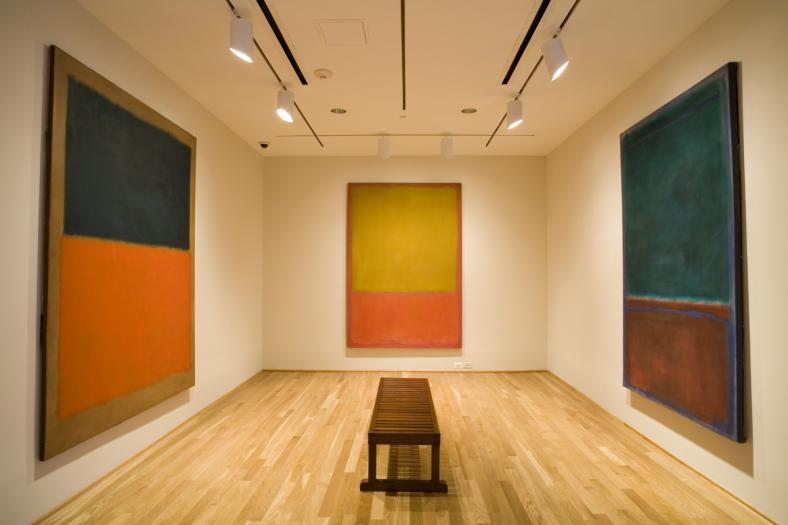
Farewell to the Past No. 3 (1941)
The Migration Series, Panel no. 7: The migrant, whose life had been rural and nurtured by the earth, was now moving to urban life dependent on industrial machinery. (between 1940 and 1941)
The Migration Series, Panel no. 9: They left because the boll weevil had ravaged the cotton crop. (between 1940 and 1941)
The Migration Series, Panel no. 13: The crops were left to dry and rot. There was no one to tend them. (between 1940 and 1941)
The Migration Series, Panel no. 17: Tenant farmers received harsh treatment at the hands of planters. (between 1940 and 1941)
The Migration Series, Panel no. 19: There had always been discrimination. (between 1940 and 1941)
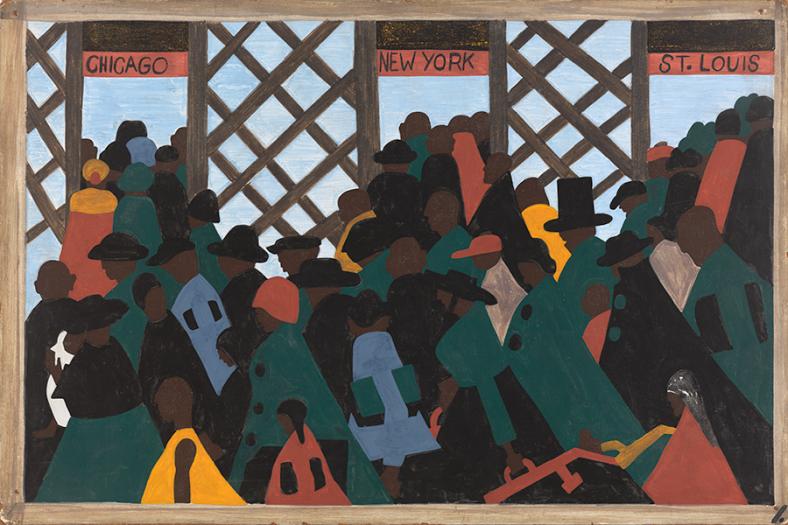
The Migration Series, Panel no. 21: Families arrived at the station very early. They did not wish to miss their trains north. (between 1940 and 1941)
The Migration Series, Panel no. 23: The migration spread. (between 1940 and 1941)
The Migration Series, Panel no. 25: They left their homes. Soon some communities were left almost empty. (between 1940 and 1941)
The Migration Series, Panel no. 33: Letters from relatives in the North told of the better life there. (between 1940 and 1941)
The Migration Series, Panel no. 35: They left the South in great numbers. They arrived in the North in great numbers. (between 1940 and 1941)
The Migration Series, Panel no. 37: Many migrants found work in the steel industry. (between 1940 and 1941)
The Migration Series, Panel no. 39: Railroad platforms were piled high with luggage. (between 1940 and 1941)
The Migration Series, Panel no. 41: The South was desperate to keep its cheap labor. Northern labor agents were jailed or forced to operate in secrecy. (between 1940 and 1941)
The Migration Series, Panel no. 43: In a few sections of the South leaders of both Black and White communities met to discuss ways of making the South a good place to live. (between 1940 and 1941)