Tomorrow the Sun Will Rise: Se Jong Cho
Exhibitions & Events
Learn more about the artists in Tomorrow the Sun Will Rise: The Phillips Collection Juried Exhibition (on view August 1-September 20, 2026).
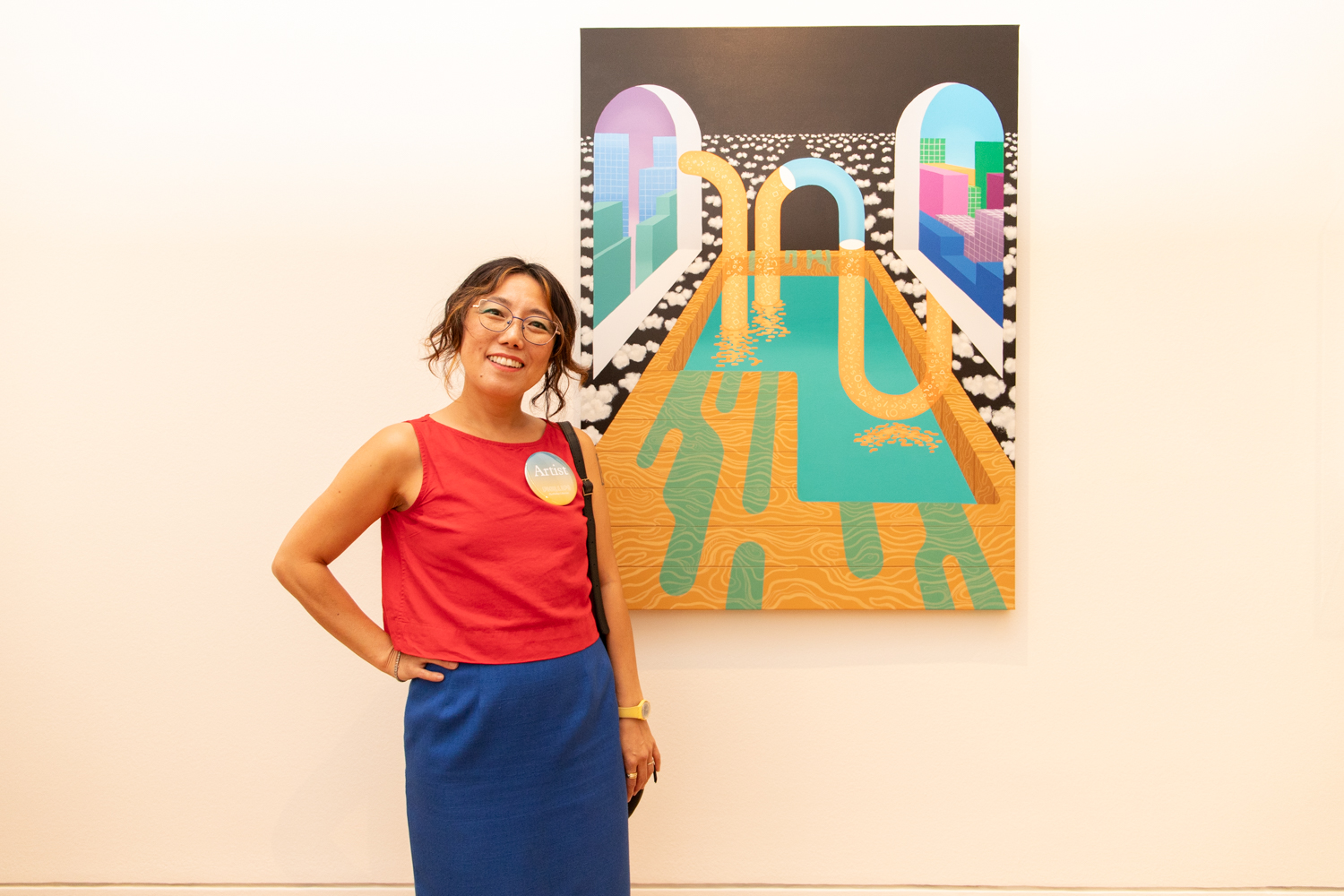
Tell us about your work in Tomorrow the Sun Will Rise.
English is my second language. Learning English as a teenage immigrant was a fascinating experience. Growing up in Korea, using language was implicit—it was something I just knew. Octavia Butler noted: “Most Humans lose access to old memories as they acquire new ones. They know how to speak, for instance, but they don’t recall learning to speak. They keep what experience has taught them—usually—but lose the experience itself.’” Learning a new language when my cognitive framework was already formed allowed me to see that using different languages shifts the way I see and interact with the world.
This awareness was affirmed once again when I decided to pursue science instead of art in college. Science education taught me to observe and interpret the world critically and precisely. This ability to build new mental models using different languages expands our cognitive empathy. It is an important step toward building trust and strengthening relationships through an expanded understanding of how others see and interact with the world. These paintings interrogate competing languages and orthographies (sets of conventions for language). The pieces feature a set of synthetic symbols representing the elemental shapes of Korean, English, and mathematical signs. These synthetic symbols invite the audience to examine their own multiple cognitive structures, as well as the mental gymnastics we perform every day to translate our inner thoughts, produce meaning, and establish communication.
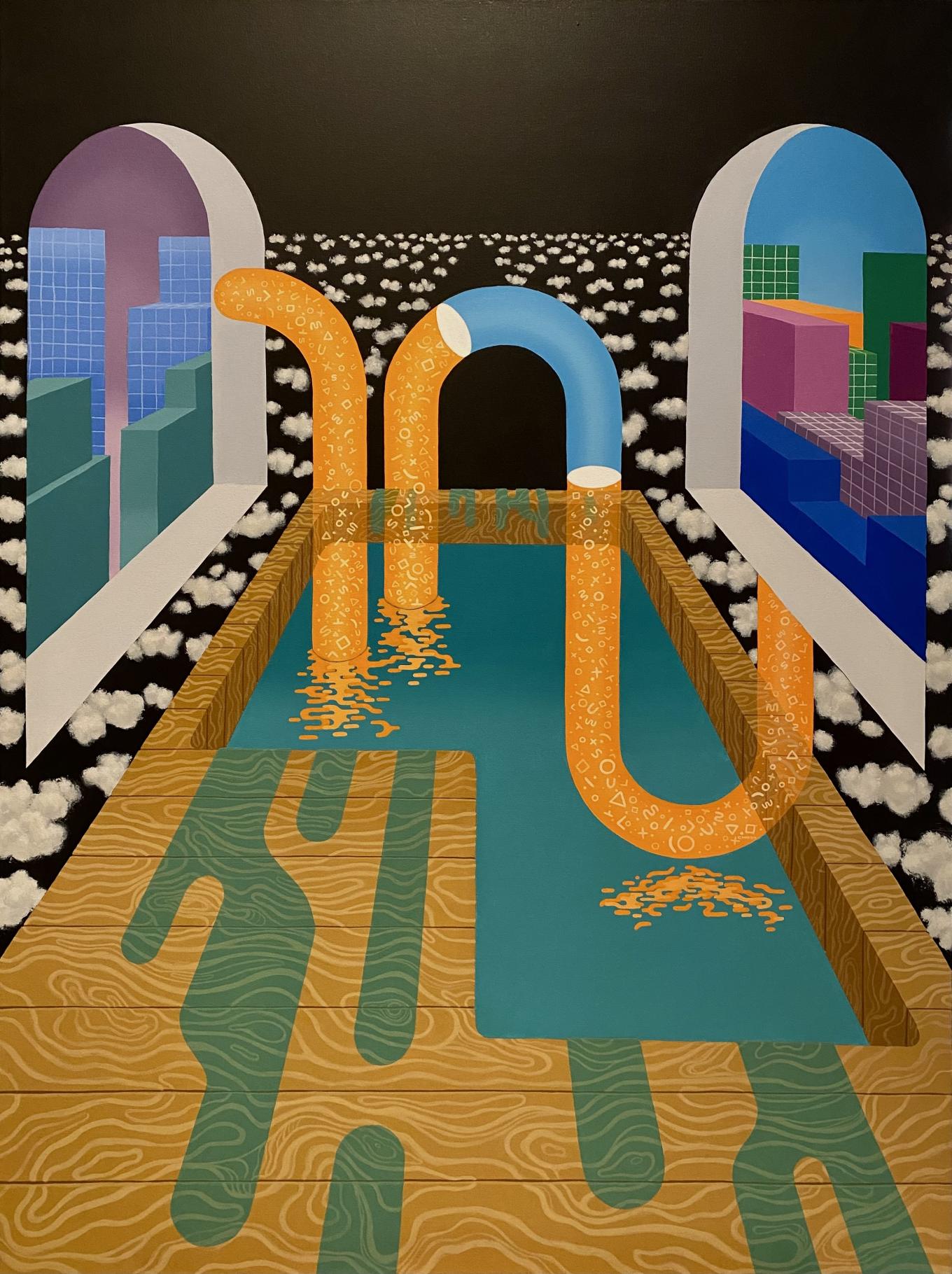
Se Jong Cho, Tile Mountain, Acrylic on canvas, 48 x 36 in.
Tell us about your artistic process.
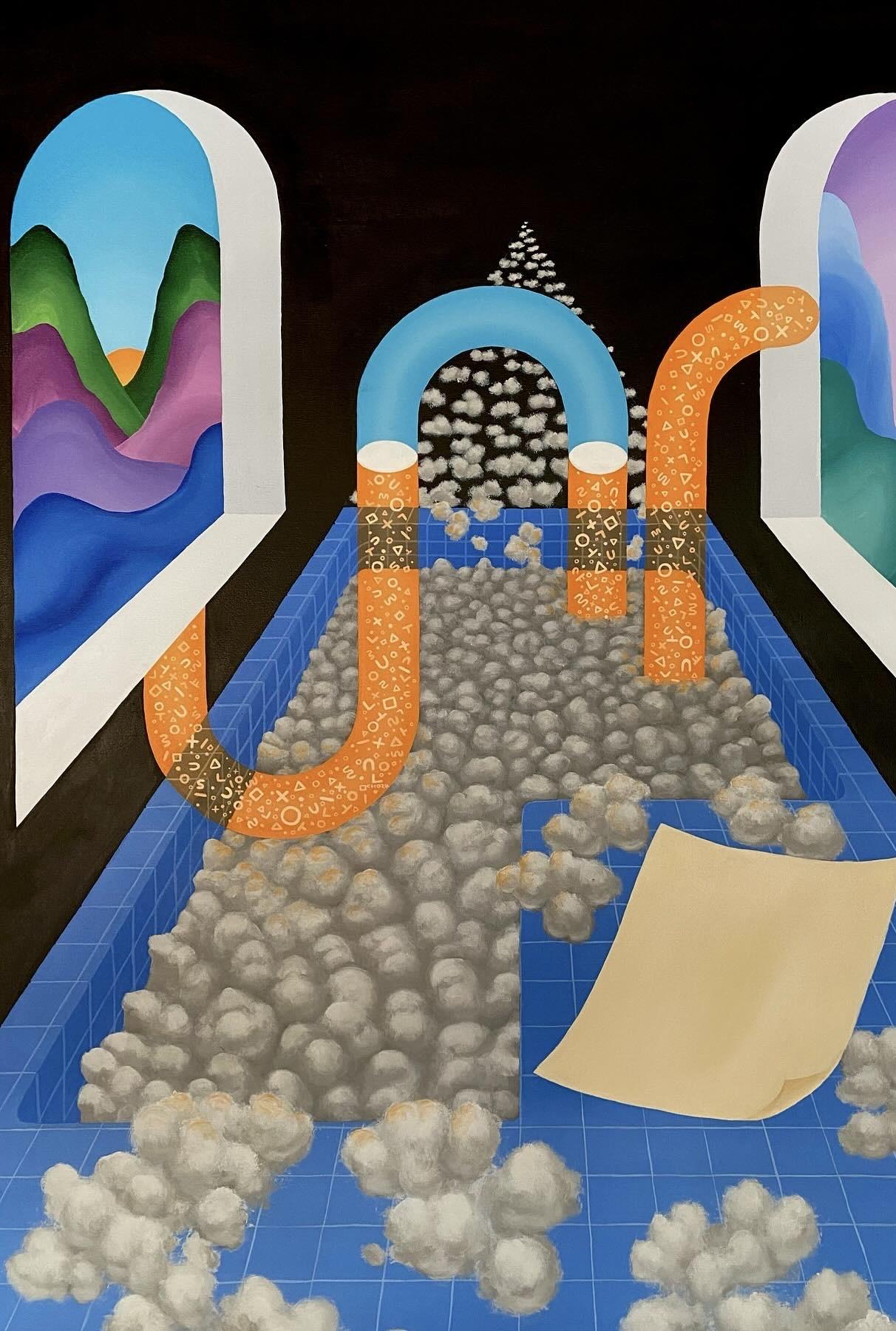
Se Jong Cho, Cloud Pool, Acrylic on canvas, 48 x 36 in.
While earning my PhD in Environmental Engineering, I battled imposter syndrome, having abandoned my childhood dream for art when I immigrated to the US. Remarkably, returning to painting is what carried me through my doctoral program, teaching me the incremental nature of progress and self-worth. Now, after painting for about a decade, I see how deeply art and science intertwine in my work: scientific training sharpens my critical observation, engineering disciplines structure my technical execution, and painting fuels the imagination and curiosity that drive both.
What themes are central to your artistic process?
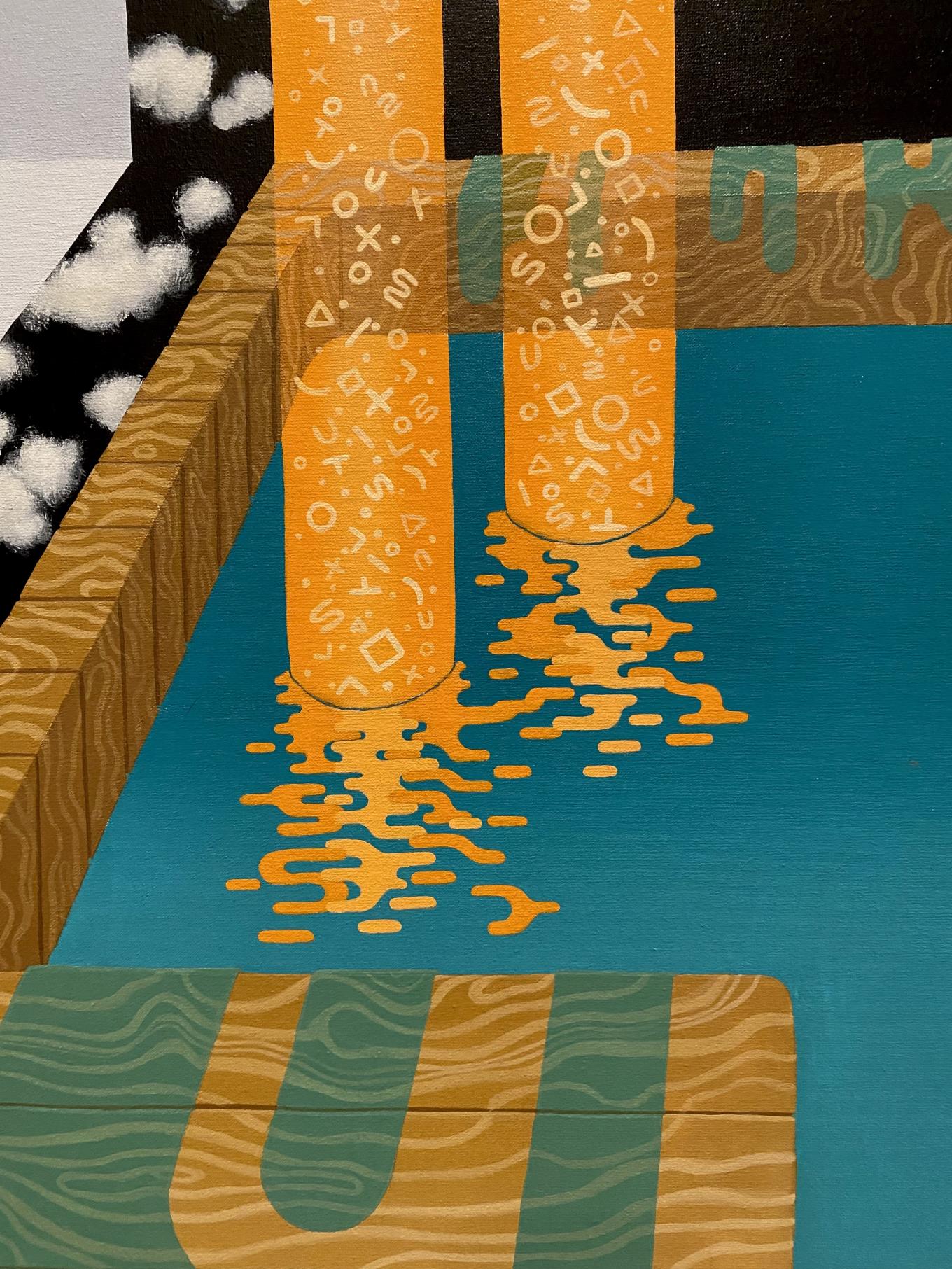
Se Jong Cho, Close-up of the symbols in Tile Mountain, Acrylic on canvas, 48 x 36 x 2 in.
Art touches people where science cannot reach. Susan Sontag observed that works of art ‘give rise not to conceptual knowledge but to something like an excitation, a phenomenon of commitment, judgment in a state of thralldom or captivation.’ At the convergence of multiple perspectives, complex stories about human relations can provide crucial context for our present conditions and dreams for the future. I make art to contribute stories from my own multiple identities—as a woman, Asian, immigrant, scientist, and artist—to the grand narrative of humanity, ensuring it is represented through a broader lens. With this wider view, our collective understanding of the world becomes more comprehensive. Primo Levi once noted that the more people realize each of us carries a small particle of the merit belonging to the human species, the less difficult and longer it will be for humanity to progress toward justice and peace. Art has the unique power to captivate people and ignite this broader perspective. That is why I make art.
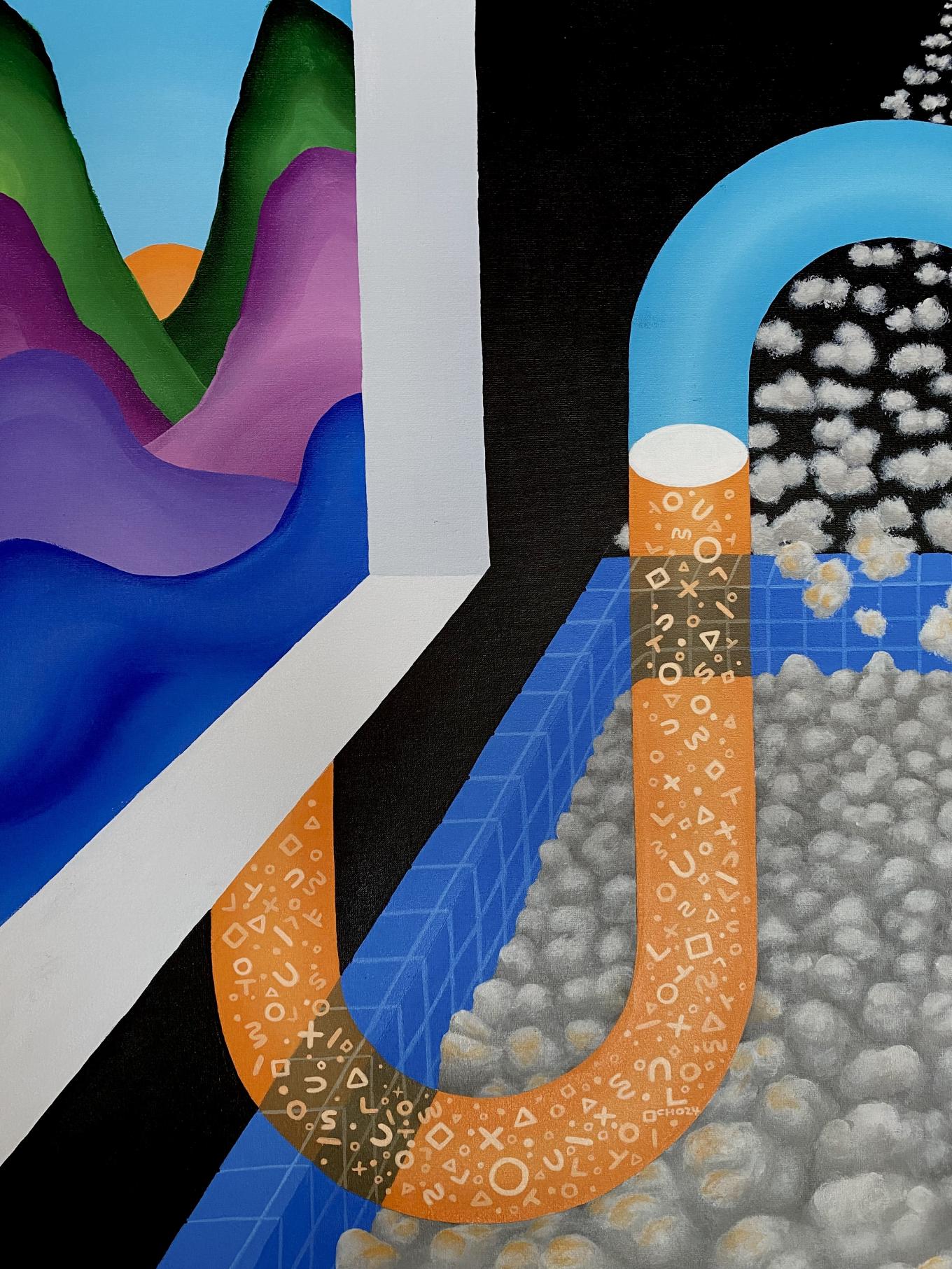
Se Jong Cho, Close-up of the symbols in Cloud Pool, Acrylic on canvas, 48 x 36 in.
How has living in the DMV area impacted and influenced your artistic journey?
The DMV area, and Baltimore in particular, is home to many artists of various backgrounds. Practicing art in this region has opened up many interesting opportunities for collaborations and group exhibitions. Last year, I participated in the Asia North exhibition, curated by Phaan Howng, who encouraged me to develop a participatory art project. In response, I designed a workshop that incorporated the signs and symbols from my paintings to collaboratively create public art with volunteers. During the workshop, volunteers assigned meanings to each symbol using a table of words from a Han Kang poem. They then used chalk paint on the sidewalk, using this chart as a guide to explore their chosen meanings and invent new narratives.
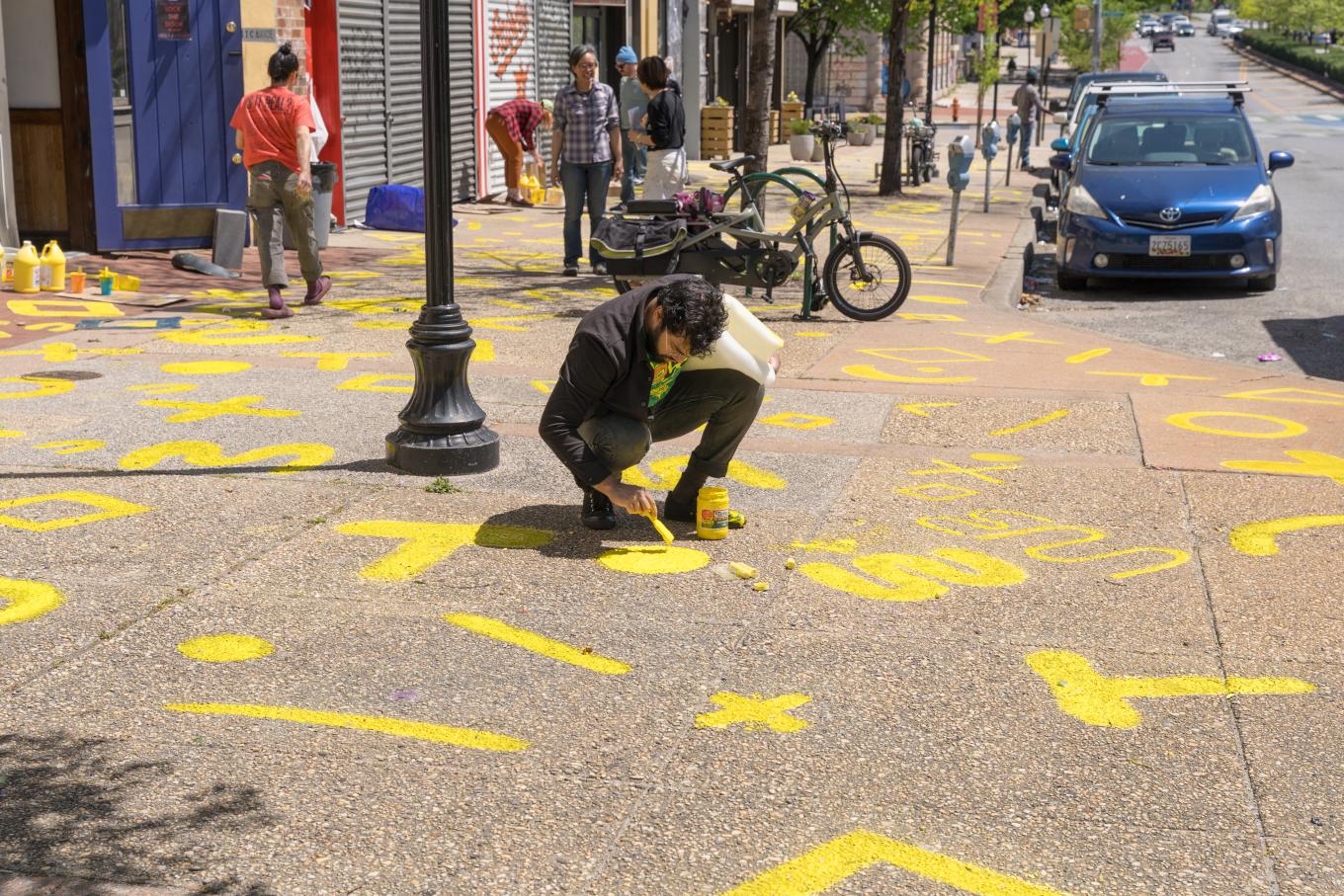
Sidewalk painting with volunteers using the symbols during the Asian North festival in Baltimore in 2025.
You can see the complete worksheet and activity photos on my website: https://sejongee.squarespace.com/signs-and-symbols