Tomorrow the Sun Will Rise: Kyle Hackett
Exhibitions & Events
Learn more about the artists in Tomorrow the Sun Will Rise: The Phillips Collection Juried Exhibition (on view August 1-September 20, 2026).
Tell us about your work in Tomorrow the Sun Will Rise.
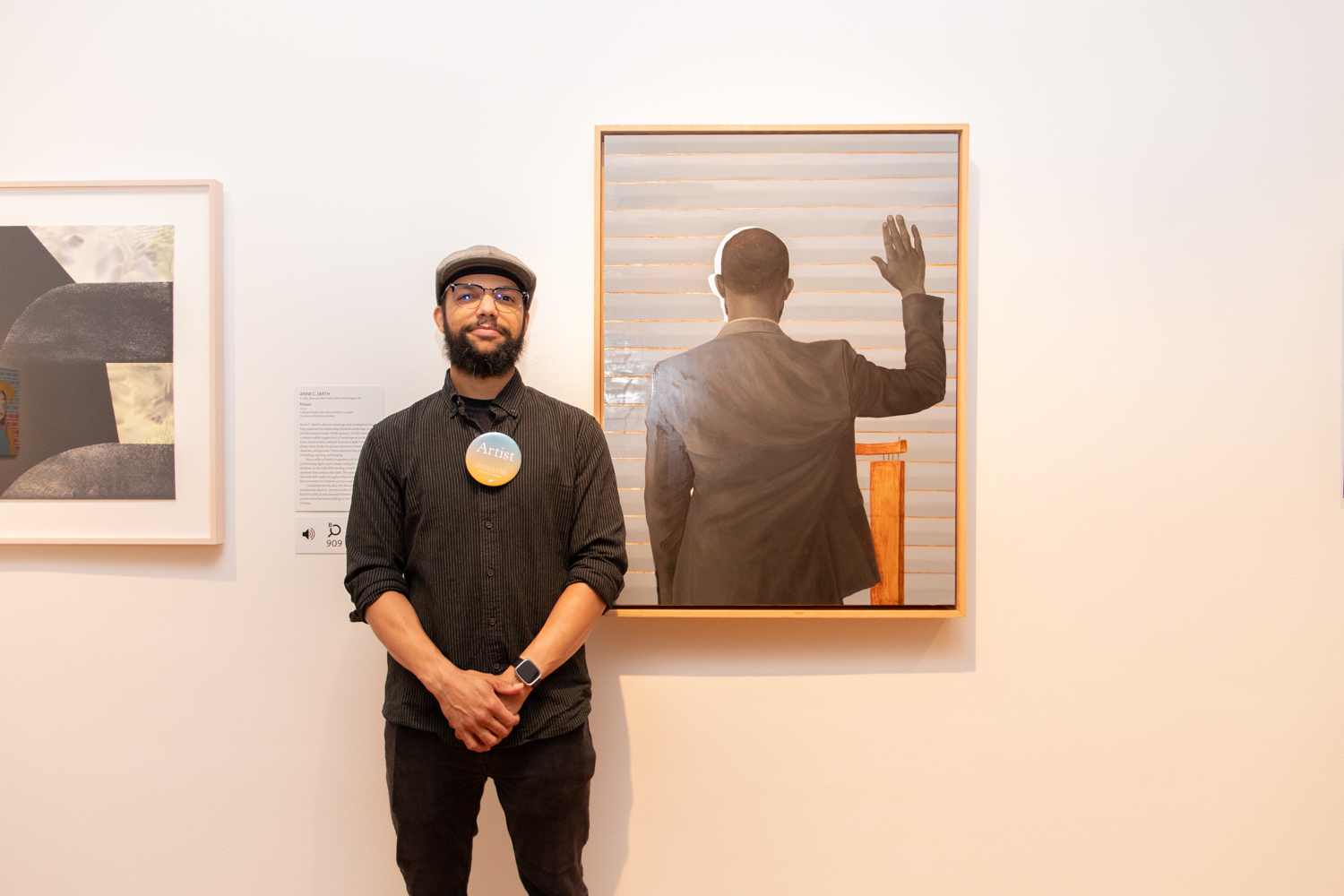
After Return Investment, is a self-portrait viewed from behind that reimagines the backside of a previous painting I created in 2014, titled After Brown, which originally references an iconic photograph of insurgent abolitionist John Brown. This work further explores painting as material, format, and facade by compressing figure-ground relationships within a nearly silhouetted image. In this self-referential process, I combine implications of the raised hand with strategies of Rückenfigur, the art historical term for a figure or portrait seen from behind, with the psychological dynamics within and against the picture plane.
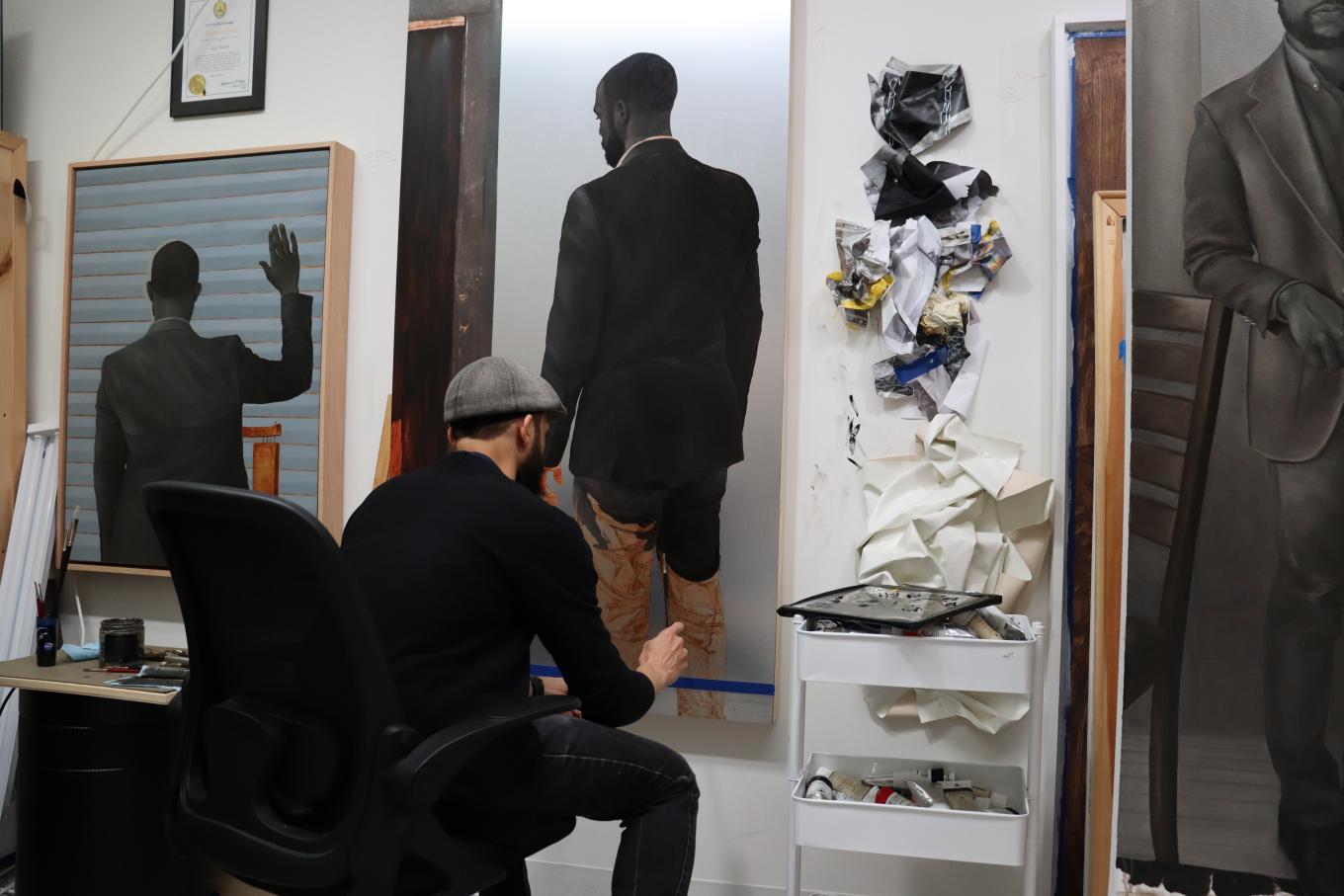
Kyle Hackett, Artist in DC studio.
Tell us about your artistic process.
I’m interested in reframing the conventions of representational painting, the traditions and hierarchies it inherits, and its capacity to represent identity—particularly forms of self-representation and the constructed image in portraiture. I have connected bodies of work that explore the status of portraits, still-life, and history painting. In many ways, my artistic process is circular. I often remake, redirect, and reframe versions of my past work, source material, and references that become the subject for new work. This process unpacks the conditions of representation, the psychology of materials, and the power dynamics of identity as a site where social, cultural, and political forces converge.
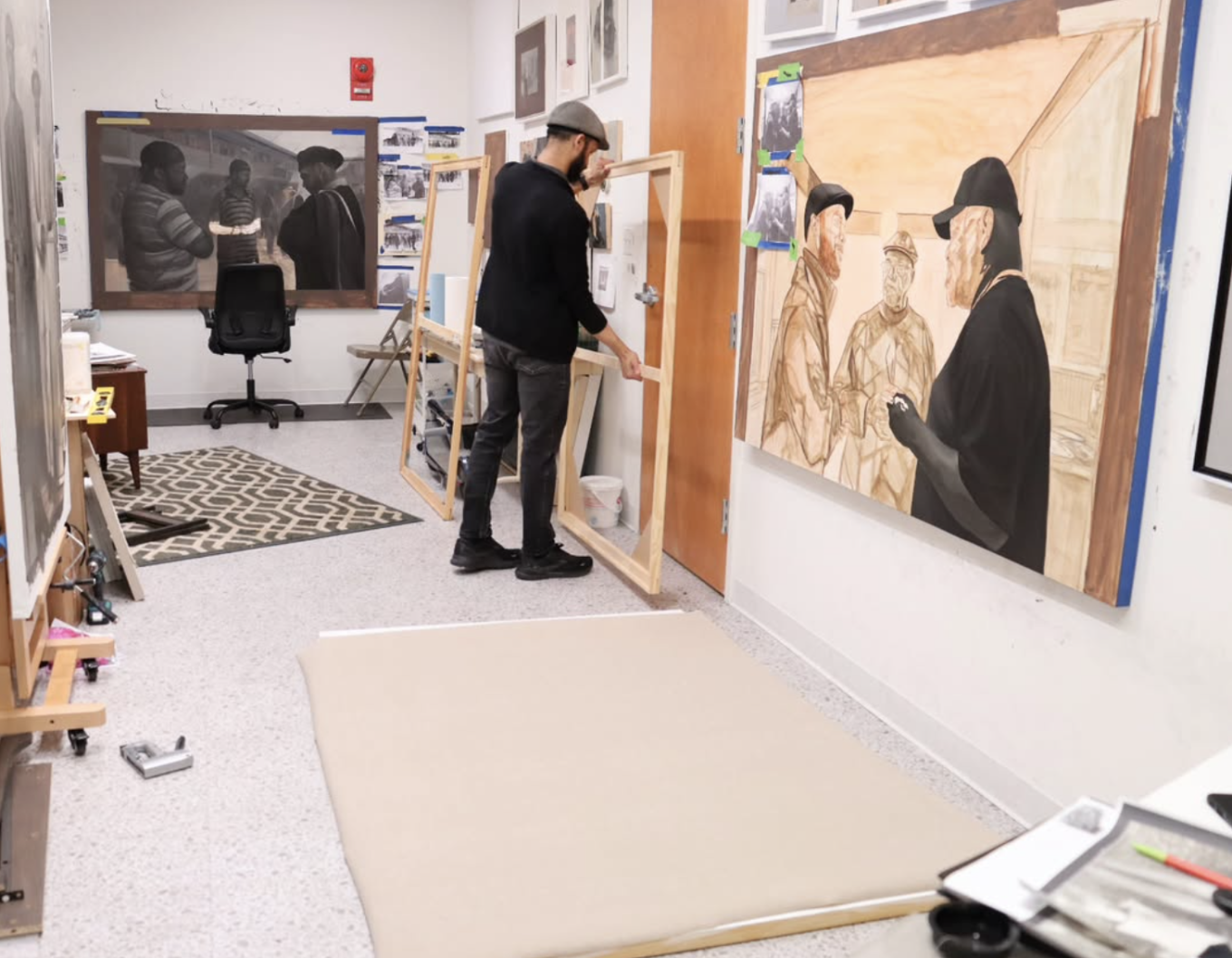
Kyle Hackett, Artist in DC studio.
What themes are central to your artistic process?
My practice explores forms of identity often through issues of race, class, and social stratification. I use concepts of the self-referential image as artifact and construct with a commitment to unpacking the history of representational painting. I consider painting an institution. Inside of that, I’m invested in how the source/referent for a painting becomes the subject/object itself, where painting is a living record—often a translation of spaces within spaces, identities within identities that relate experiences rather than exclusively define them.
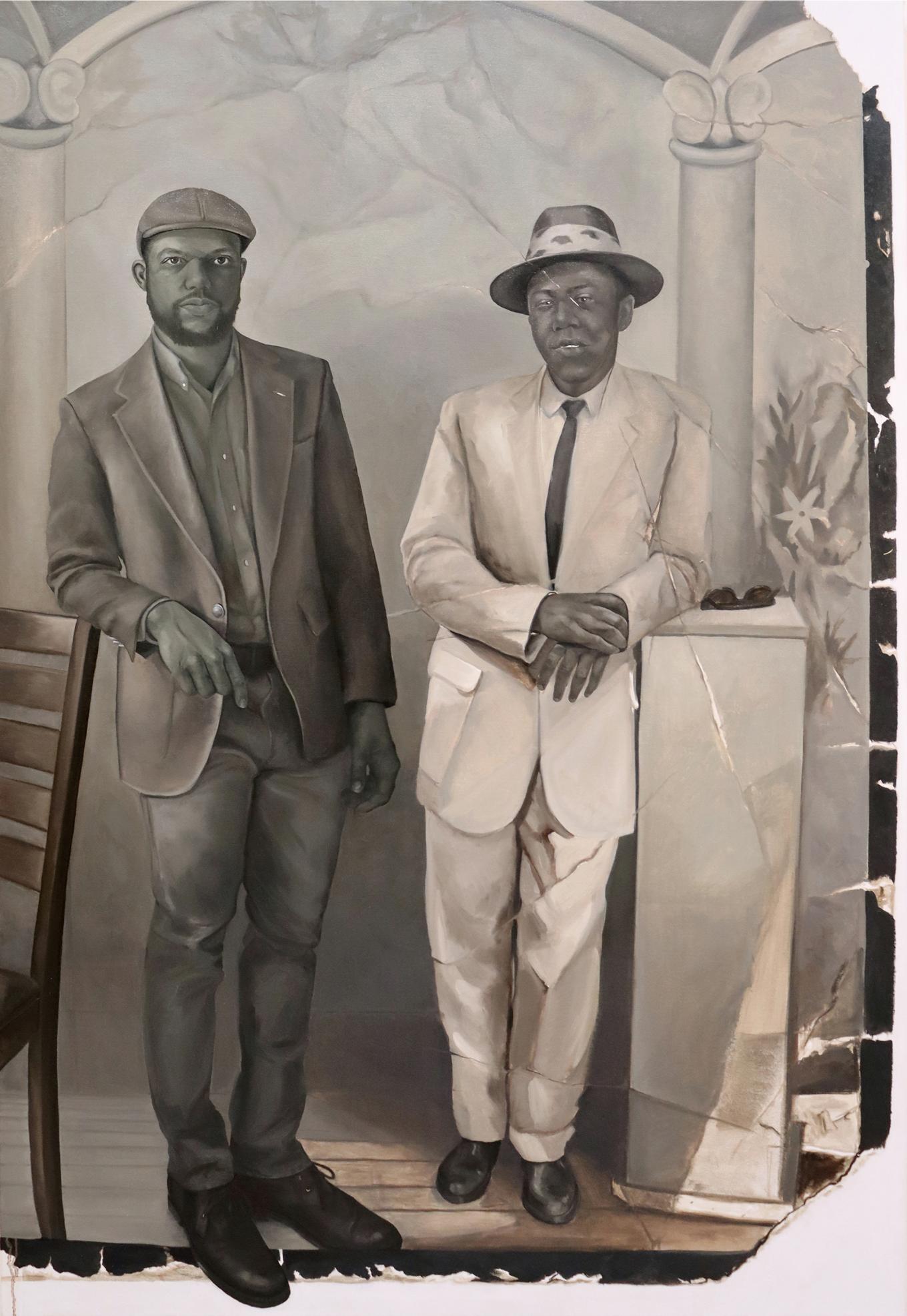
Kyle Hackett, Circular Narratives, Oil on canvas, 62 x 42 in.
At its best, this process starts and ends with a question. I consider painting a record of concurrent social, cultural, and material conditions of a particular moment in time. The act of painting can redefine cultural time and standpoints inherently in conversation with the past yet made today in the material present with the potential to open future space beyond what we know. When examining the complex history of painting alongside my own, I find power in the process of painting’s simultaneous understandings, technical, conceptual, and hierarchical implications within the found within the profound question: how do you know what you know? To what extent can this relate to and/or undo the psychological conditions of the self, the people and places I know or imagine, and their real and constructed experiences?
How has living in the DMV area impacted and influenced your artistic journey?
My work is shaped by local, national, and international institutional contexts. I constantly consider how institutions assign value and facilitate dialogue. In my studio, I explore the conceptual possibilities of portraiture, the mechanics of representation, and the ways in which images are recontextualized. DC’s museums often serve as source material for my work. I am particularly interested in the dynamics of institutional record-keeping, the psychology of viewership, and how personal narratives are reframed over time. I hope to challenge the way identity is institutionalized within historical painting genres.
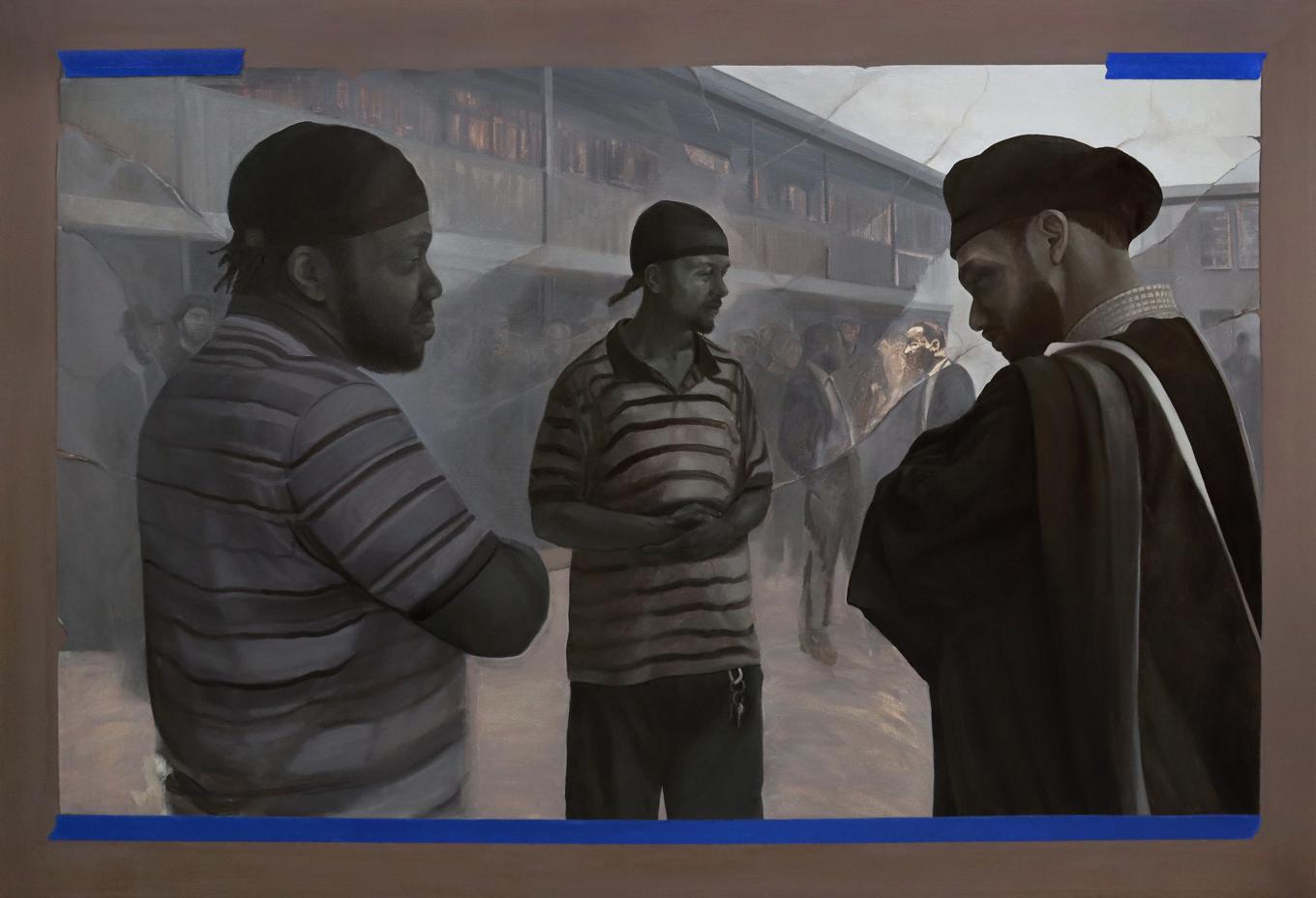
Kyle Hackett, For A.G. Gaston (Birmingham), Oil on canvas, 50 x 73 in.
Meanwhile, as an artist and an educator who has lived in and taught across various DC neighborhoods, I explore simultaneous identities within and against the hierarchical institutional structures and the tradition of painting. This work supports my belief in cross-institutional collaborative opportunities across the region that expand reference points. I value my work as co-director of AU’s MFA program, where I can shape critical contexts for and build the future of DC artists during this increasingly important time.
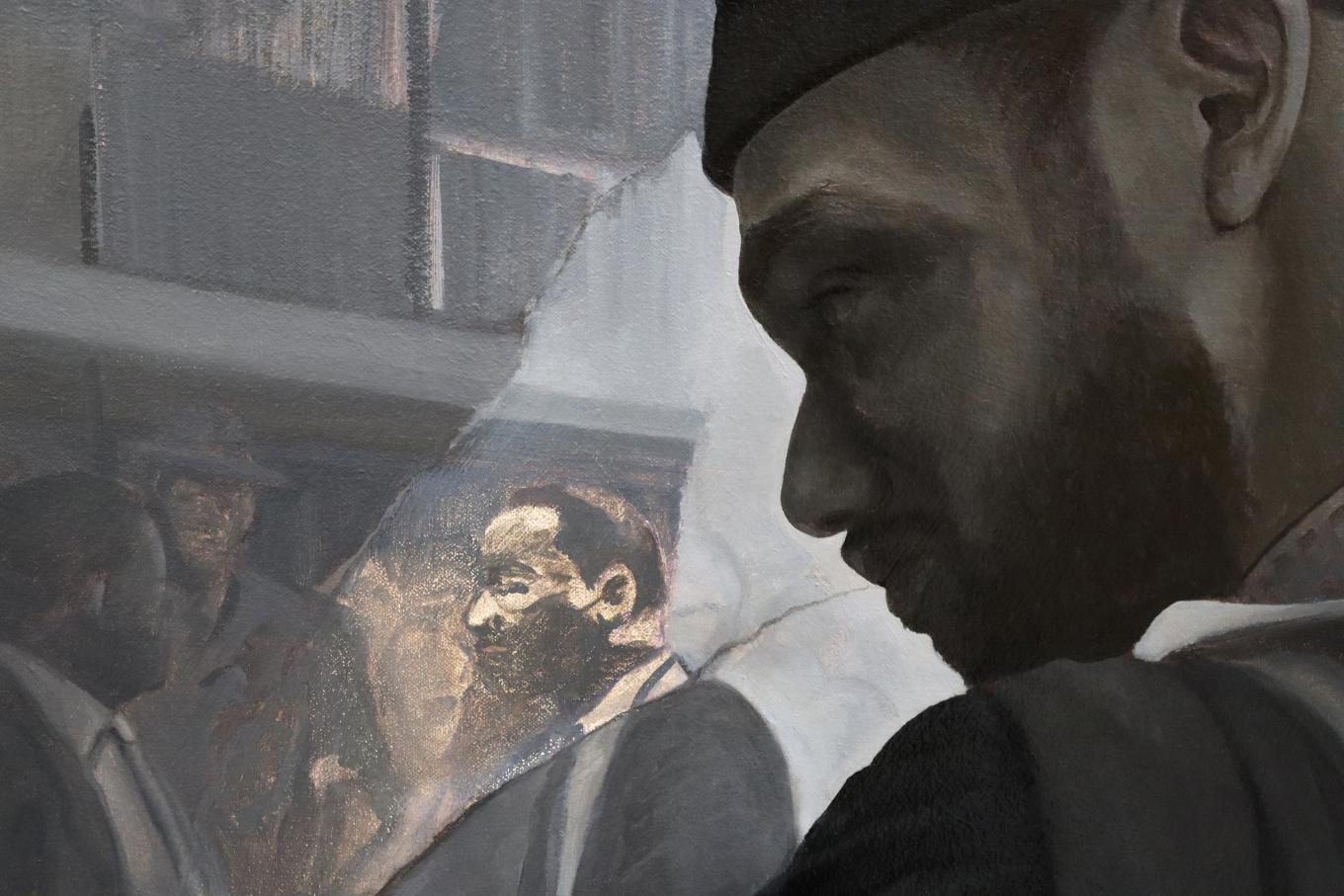
Kyle Hackett, Detail For A.G. Gaston (Birmingham), Oil on canvas, 50 x 73 in.
What does it mean to you to be part of this exhibition?
I’m thrilled to exhibit my recent work at The Phillips Collection—a defining institution in the city I call home, but rarely get the chance to exhibit in. Tomorrow the Sun Will Rise offers a critical platform for dialogue with the region’s artistic community. In DC, I’ve noticed opportunities for local artists to exhibit beyond sale is limited, particularly when it comes to shows that invite deep critical discourse. This exhibition opens crucial space often overlooked in DC. I’m grateful for the opportunity to reframe the institutional lens; it’s a collaborative programming and platform that highlights the complexities and rigor of the region’s artists “at home”.
Anything else you would like to share about you/your art?
I’m eager to share my recent work in person with the DC arts community that I’ve been so involved in over the past decade. I’m honored to be included and inspired by The Phillips Collection’s increased focus on regional artists in this curatorial project. I hope that many can see my painting in person, spending time with the work beyond its surface. For this interview, I’ve included a detail view of selected artworks to convey the nuanced surface qualities and material presence that define my practice. These select images highlight process, the tactile and sensory attributes, as well as the shifts in paint language that significantly contribute to my work. Thanks again for the chance to share my work at home!