Tomorrow the Sun Will Rise: Margaret Murphy
Exhibitions & Events
Learn more about the artists in Tomorrow the Sun Will Rise: The Phillips Collection Juried Exhibition (on view August 1-September 20, 2026).
Tell us about your work in Tomorrow the Sun Will Rise.
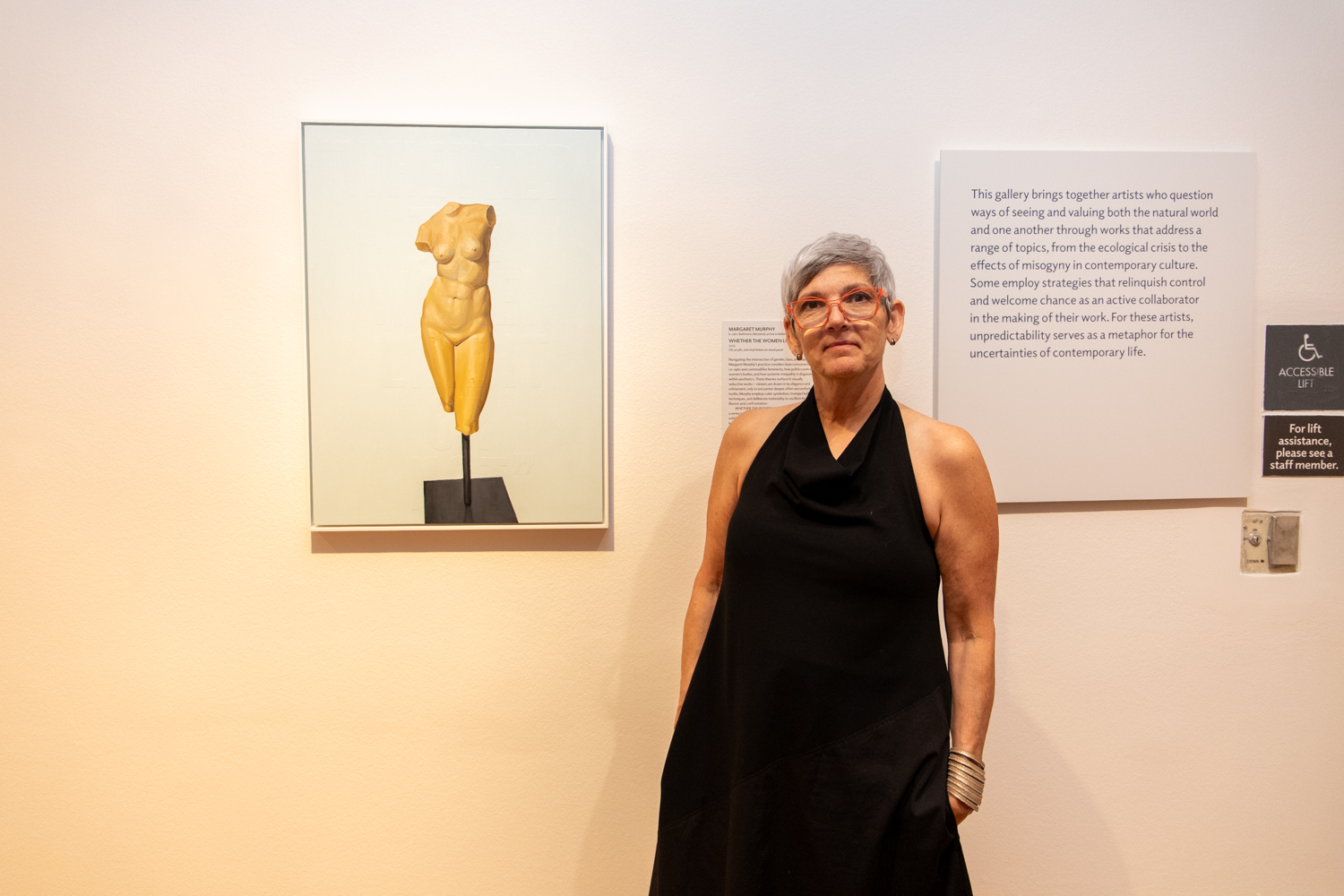
The painting in this exhibition depicts a generic Venus de Milo statuette purchased on Amazon. It is not an exact replica, yet with the missing arms and contrapposto pose we immediately recognize it as Venus. Unlike the ancient Greek sculpture, whose lower body is partially draped, the Amazon version is suspended by a black metal rod attached to a base, emphasizing its transformation into a mass-produced decorative object.
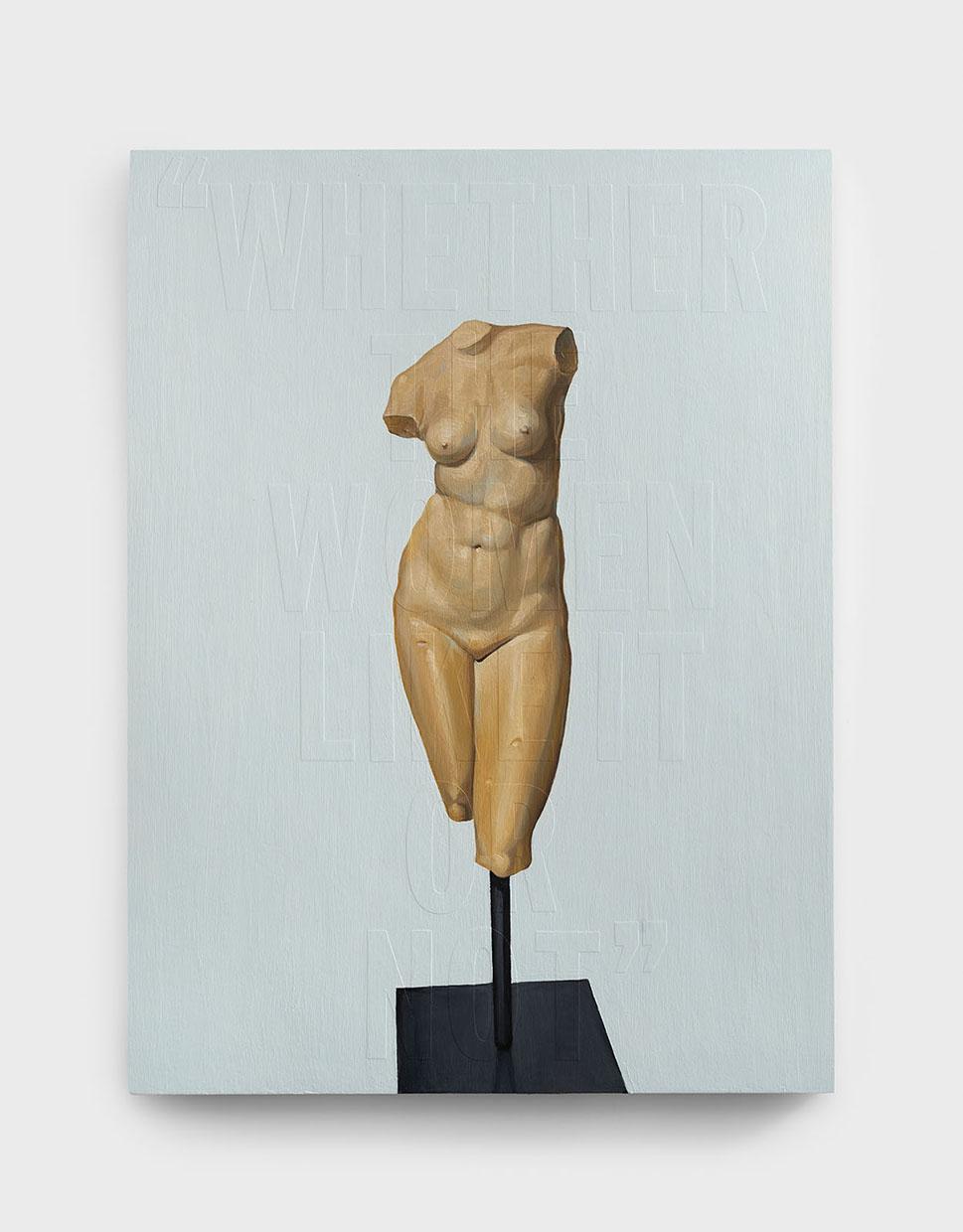
Margaret Murphy, WHETHER THE WOMEN LIKE IT OR NOT, 2025, Oil and vinyl letters on wood panel, 30 x 22 x 1 1/2 in.
Beneath the painted surface, I embedded text that is visible only in directional light. It reveals a quote by Donald Trump during the 2024 presidential campaign, when he promised to protect women “whether they like it or not.” The statement immediately raises questions about consent, paternalism, and the long-standing belief that women need protection. Contemporary feminist perspectives challenge this assumption, recognizing that violence against women and the erosion of women’s bodily autonomy are systemic problems that often require protection from male violence rather than protection by men. The painting places the idealized female form in dialogue with this rhetoric, exposing the tension between historical representations of women and the political realities they continue to confront.
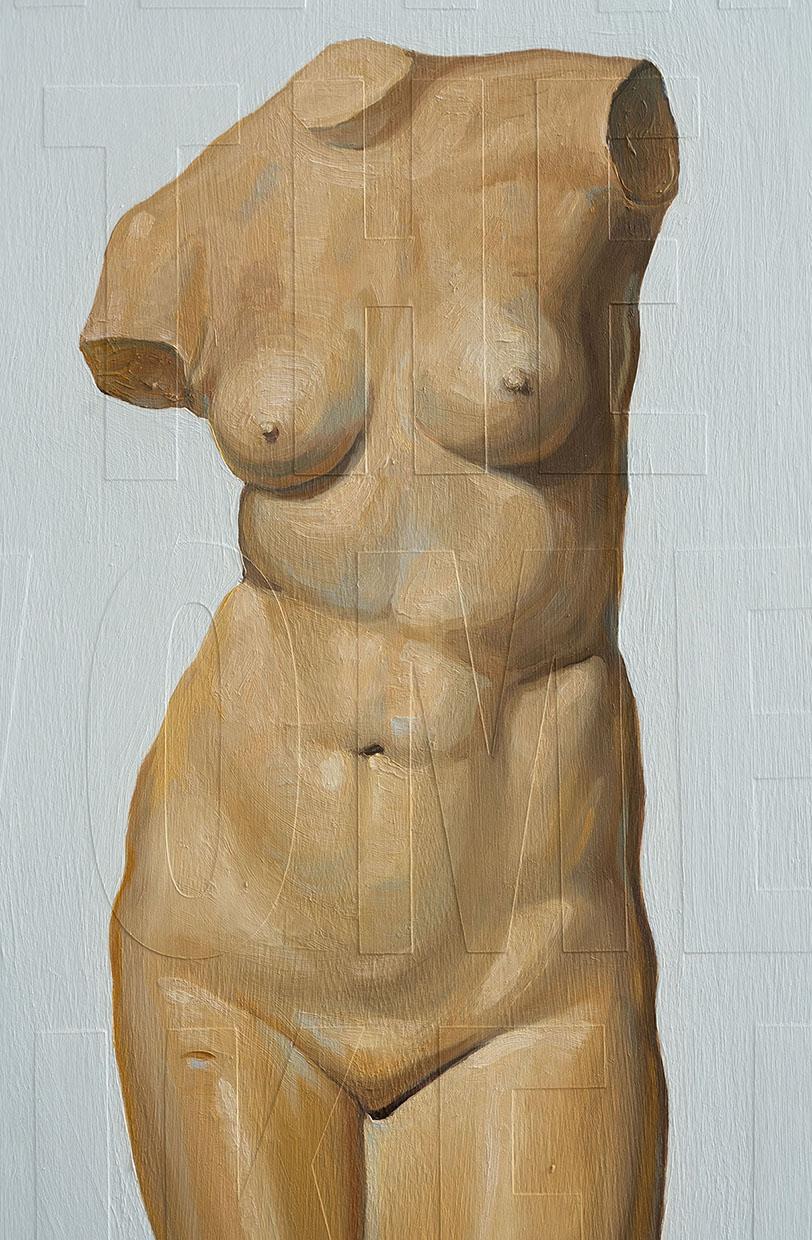
Margaret Murphy, Detail: WHETHER THE WOMEN LIKE IT OR NOT, Oil, acrylic, and vinyl letters on wood panel, 30 x 22 x 1 1/2 in.
Tell us about your artistic process.
As a painter, I draw upon the history of painting and material culture, where wallpaper, textile design, still-life traditions, and figurative painting intersect with news headlines and inexpensive mass-produced objects. Through color, trompe-l’œil illusionism, and mixed media, I combine beauty with social critique, inviting viewers to reconsider the familiar objects and images that shape our understanding of gender, value, and power.
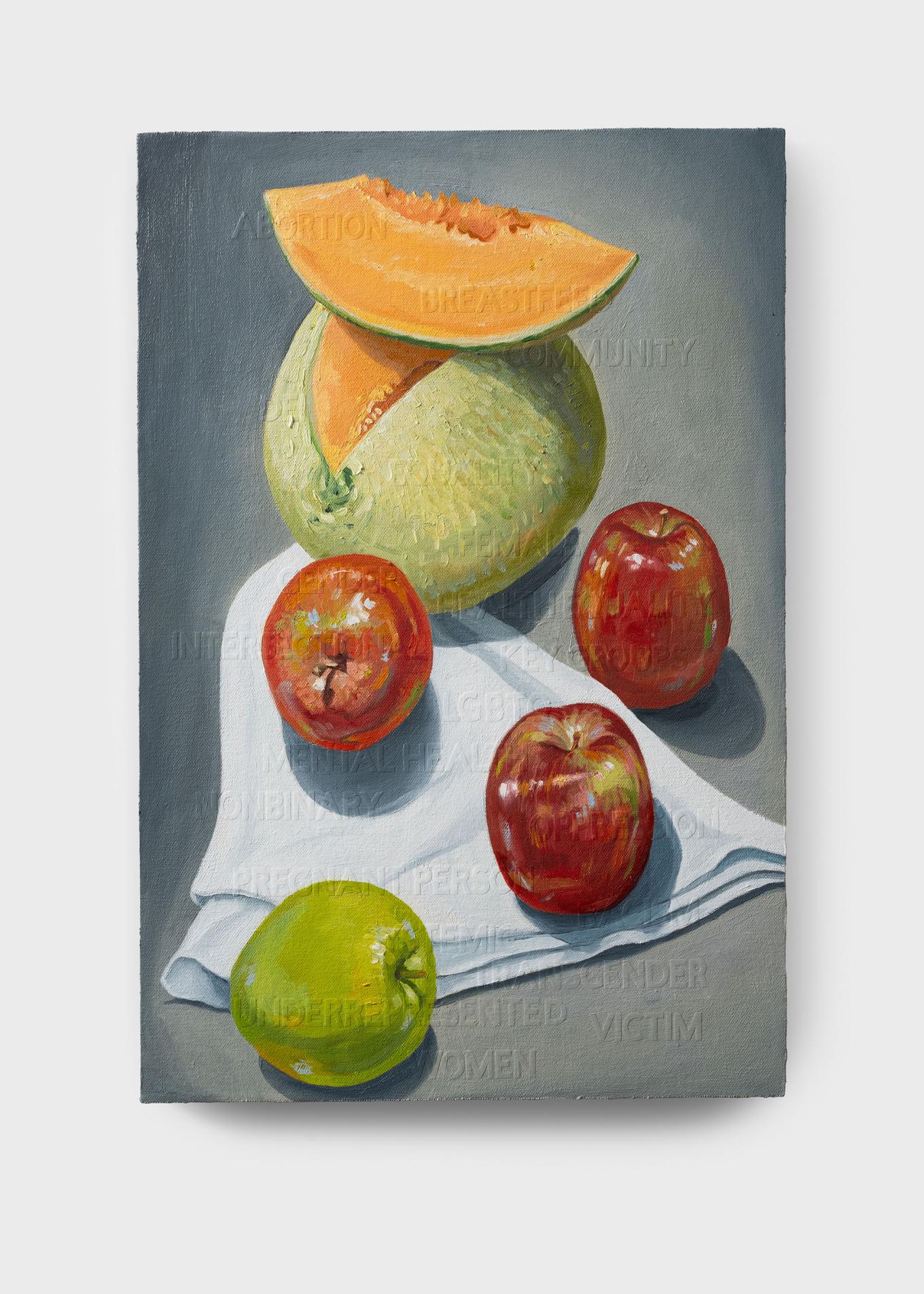
Margaret Murphy, Banned Words, Oil on canvas mounted on wood, 18 x 14 in.
My paintings and mixed-media works develop in series, allowing me to examine these concerns from multiple perspectives over time. Moving through my everyday life with a critical eye, I continually reflect on my experiences as a feminist, artist, woman, community member, mother, educator, worker, friend, sister, and consumer. I explore how capitalism shapes these intersecting roles through consumer products, the history of art, current events, and personal experience. For me, these influences are inseparable: political events become deeply personal, while ordinary acts of consumption reveal the ways gender is constructed, marketed, and reinforced through visual culture.
What themes are central to your artistic process?
I have created bodies of work centered on dollar-store figurines, mass-produced dresses, media coverage of world events, flowers, still life, and contemporary political rhetoric. While each series begins with a specific subject, together they reveal how consumer culture, history, and politics reinforce enduring narratives about women in society.
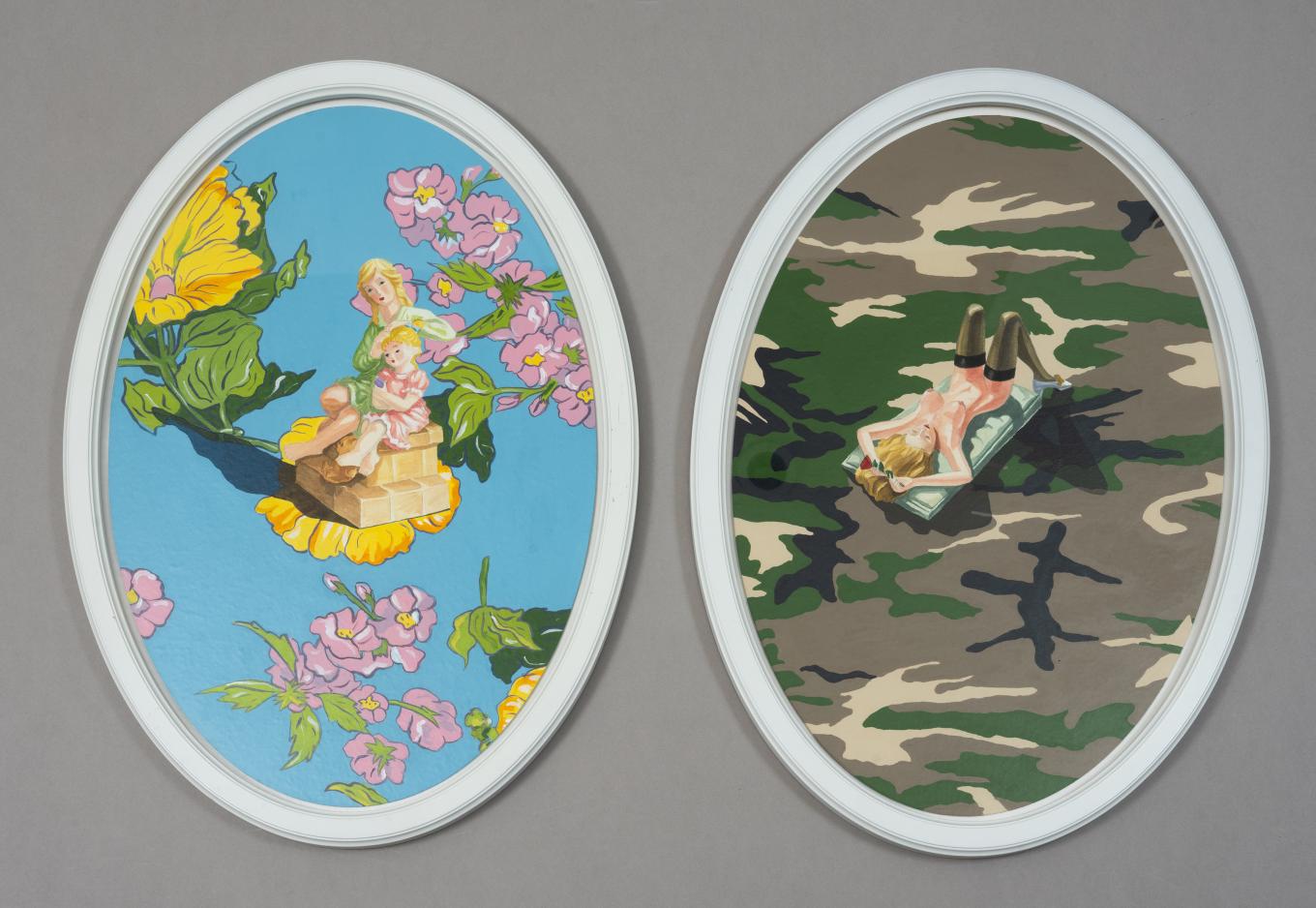
Margaret Murphy, Good Girls Bad Girls, Watercolor and acrylic on paper, 20 x 14 in.
How has living in the DMV area impacted and influenced your artistic journey?
I have been working as an artist for more than 30 years, including the last eight in the DMV area. It has brought me back to my roots as a painter—I am painting still life with oil on canvas (and wood panel) influenced by traditional still life I see in the wonderful abundance of museums in the area. I look to the history of still life painting such as Chardin’s The Cut Melon and paintings in the Phillips collection—such as Cezanne’s Ginger Pot With Pomegranate and Pears, and Marsden Hartley’s Wild Roses—to reinterpret for this new body of work combining text with still life.
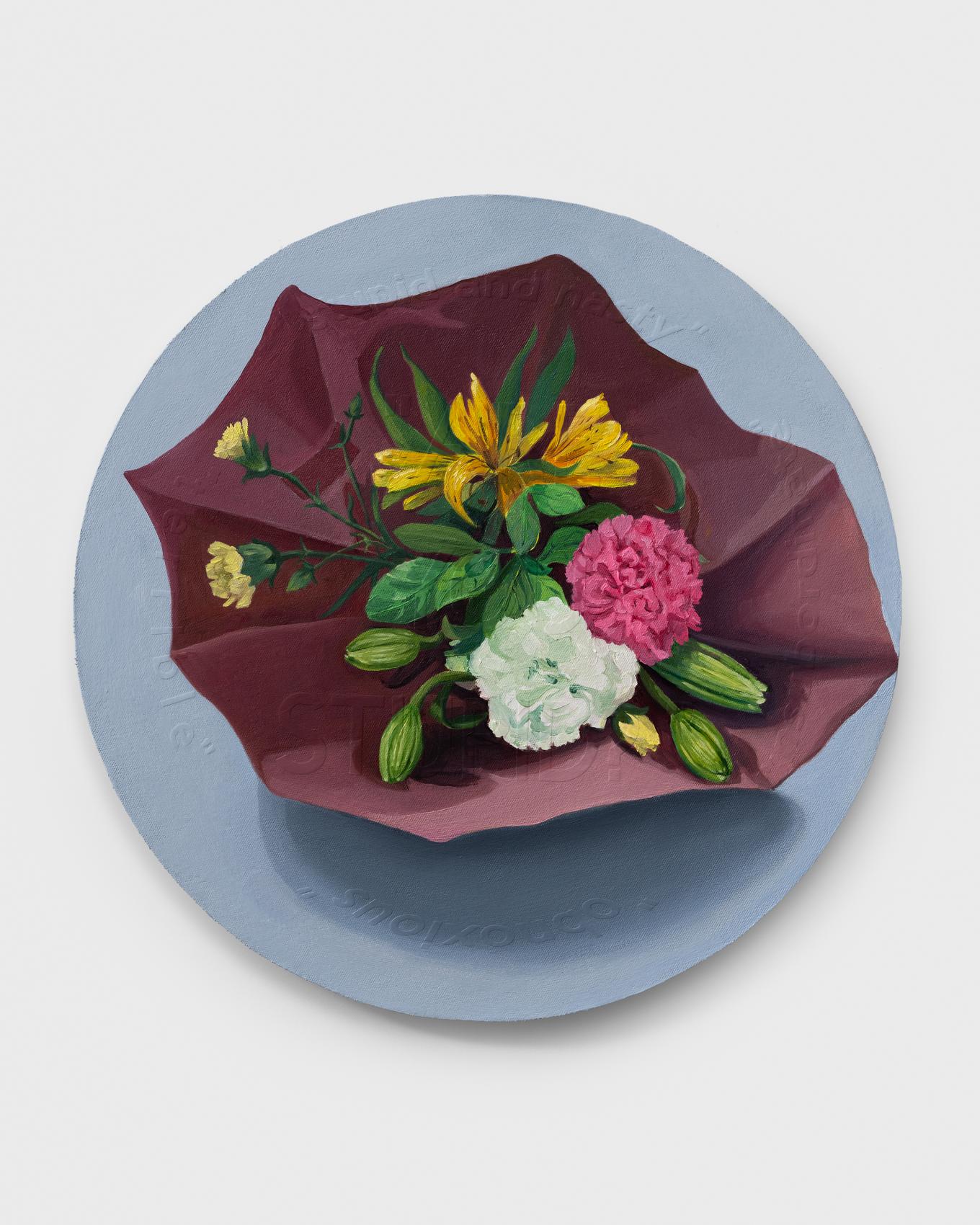
Margaret Murphy, Are You Stupid, Oil on canvas mounted on wood, 16 in. diameter.
What does it mean to you to be part of this exhibition?
Because my paintings engage with the history of art and power structures, it is important to me that the work is exhibited in an institution committed to preserving artistic traditions while creating space for new ideas and perspectives. In Duncan Phillips’s own words, “Art is part of the social purpose of the world.” Having my painting included in this exhibition is especially meaningful because it places my work within that ongoing dialogue between history, culture, and contemporary experience.
Anything else you would like to share about you/your art?
In addition to making art I also ran an exhibition space out of my garage in Jersey City from 2005-2009. The archives of that project are in the Smithsonian’s Archives of American Art.