How The Phillips Collection Exhibits Music Through Art
Collection, Phillips Music
Phillips Music Intern Gigi Weislogel shares examples of artworks in the collection that are inspired by music.
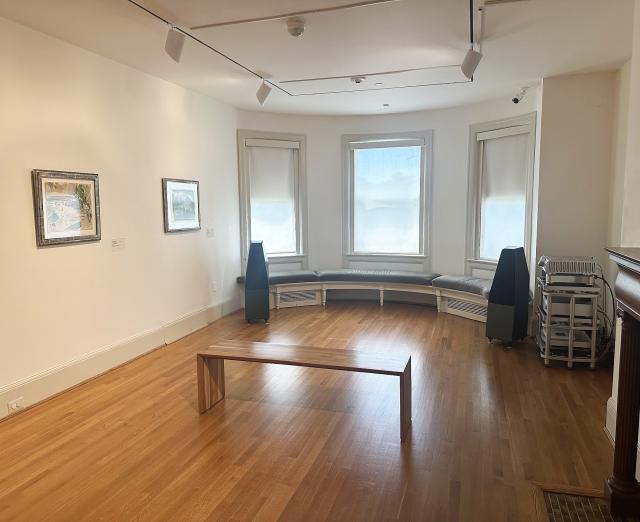
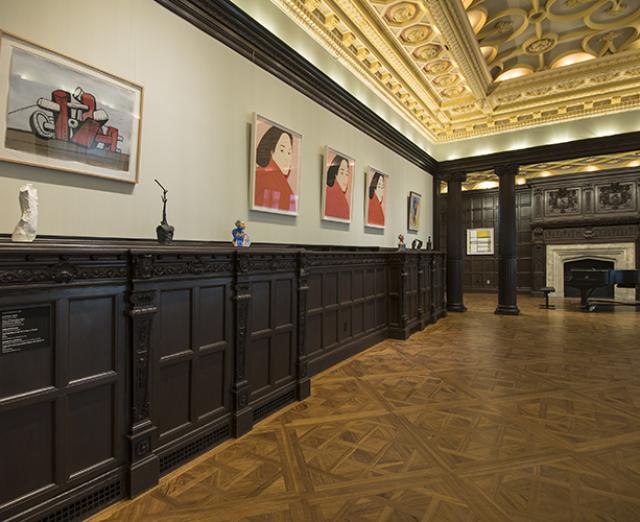
Duncan Phillips was always enamored by the connection between music and the visual arts. In 1915 he wrote that while music provides people with “spiritual nourishment and exultation…paintings seek to speak to their souls in the same musical way.” The Phillips Collection has been dedicated to supporting these connections between art and music, acting in the spirit of our founder’s belief that the experience of art and music is closely entwined.
To celebrate the launch of the 2026-27 season of Phillips Music, here are five examples from the collection of art inspired by music.
1. Ferdinand-Victor-Eugène Delacroix, Paganini (1831)
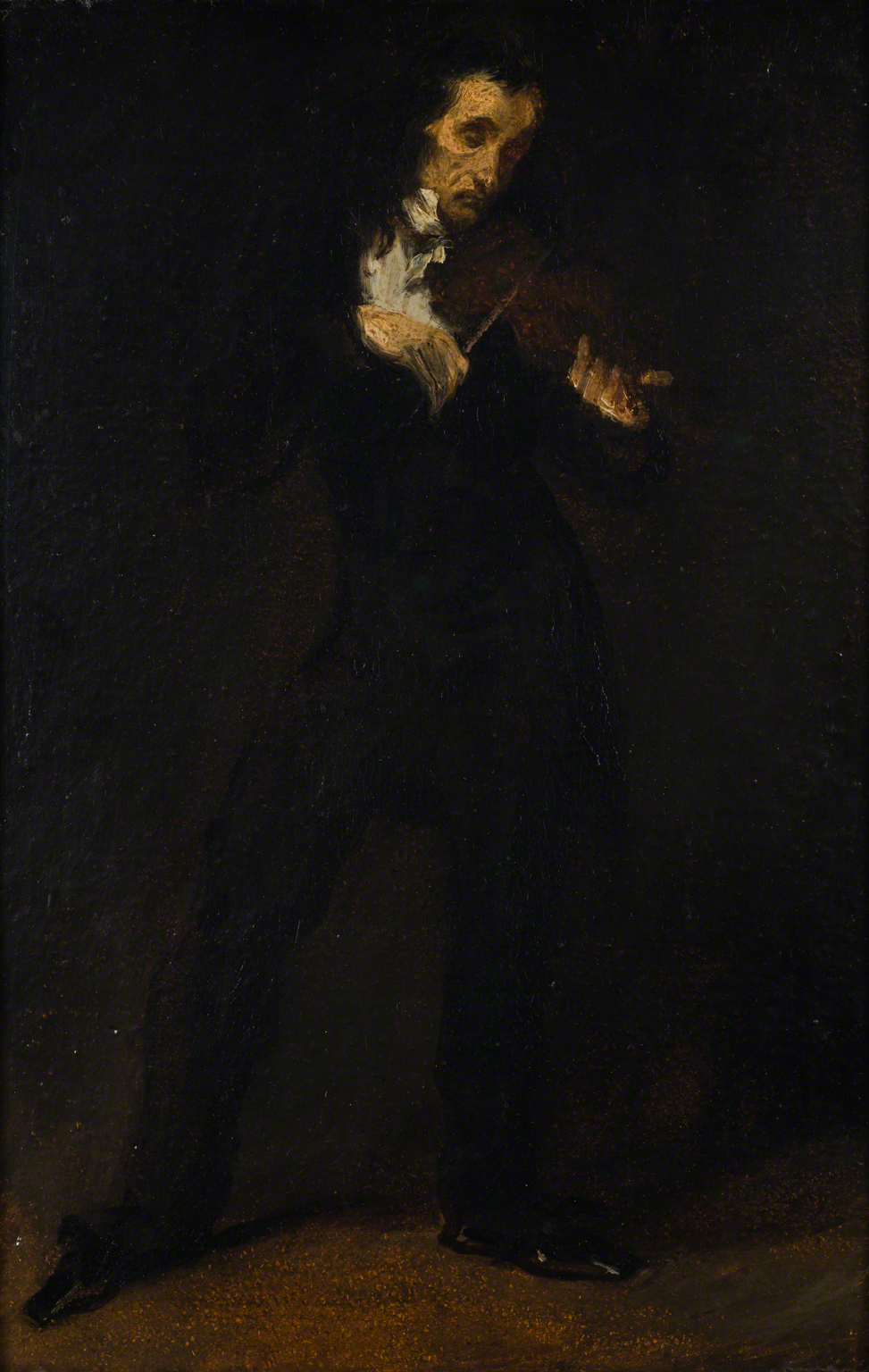
After hearing the legendary Italian violinist and composer Nicolo Paganini play at the Paris Opera on March 9, 1831, Eugène Delacroix couldn’t help but paint the virtuoso in all his glory. As Delacroix was a musician himself, it is easy to see the connection between music and art in this piece. In his journal he compared sketches to musical improvisations and noted the similarities between the movement of a paintbrush and the drawing of a bow. Here, Delacroix’s portrait, rough and sketch-like with its gestural brushstrokes and finish, parallels Nicolo Paganini’s performance style, true to both the artistic and musical movements of the Romantic era.
In this painting, Paganini is portrayed in a dramatic manner, as Delacroix limited his use of color compared to his other compositions during this period. This choice evokes an intensity within the scene that captures the musical genius and unique charisma of the virtuosic violin player. The combination of cool and warm colors creates a vibrant atmosphere that draws the eye to the violinist’s hands and instrument. This painting is Paganini’s performance in art, memorialized forever in paint, and performed time and time again when audiences experience the passion and energy of this piece.
2. Paul Klee, Arab Song (1932)
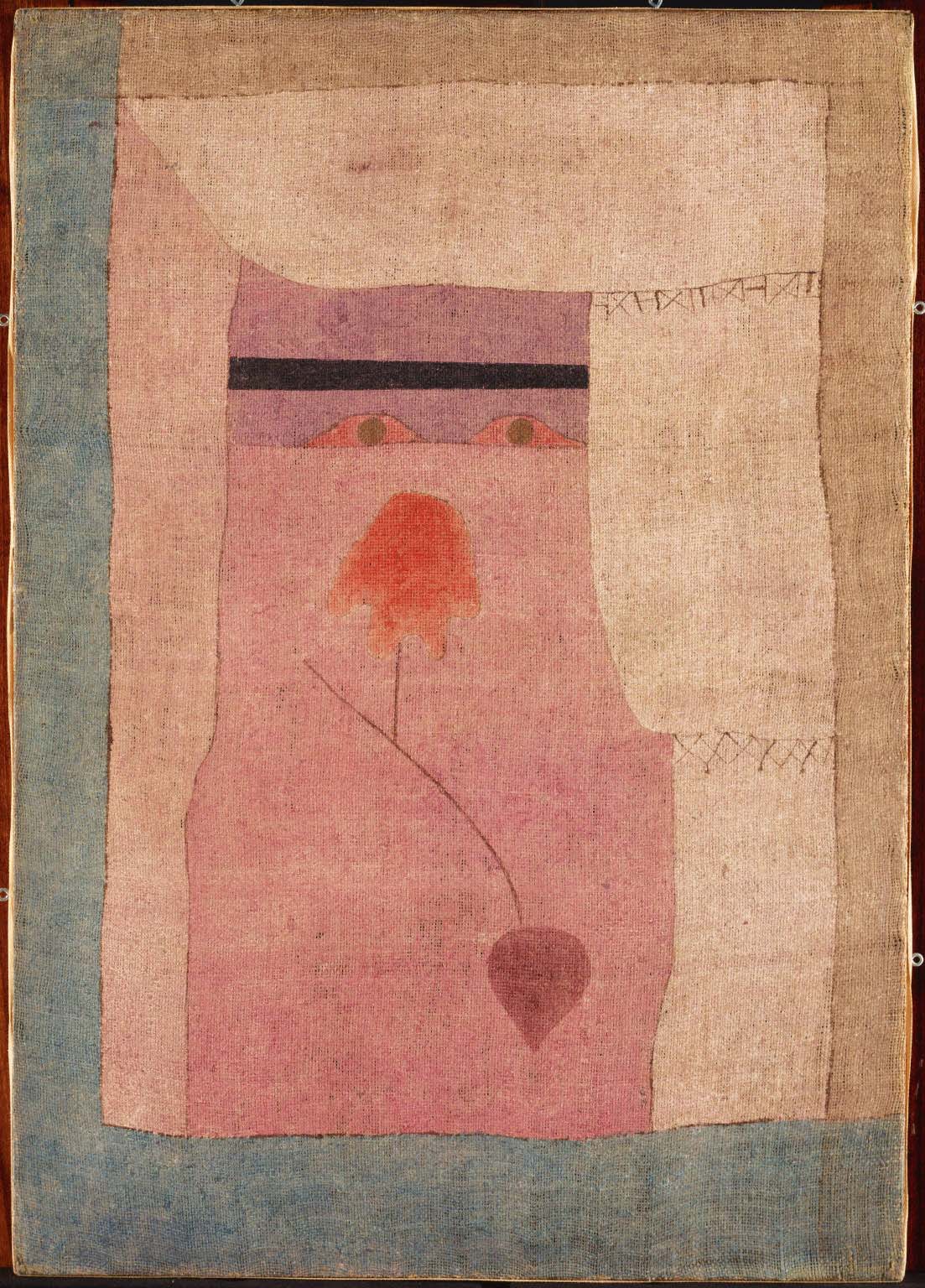
The son of German music teacher Hans Wilhelm Klee and Swiss singer Ida Marie Klee, Paul Klee developed a love and dedication to music from an early age. A violin prodigy, Klee was heavily encouraged by his parents to pursue music professionally. However, as his interests progressed, the young Klee decided on the visual arts partly as an act of rebellion and partly because modern music lacked meaning for him. Nevertheless, his musical upbringing greatly influenced his art for the rest of his life, focusing on color and layering as complex as the world he left behind.
Arab Song is an exceptional example of the artist’s search for a visual counterpart to music. Inspired by the ever-shifting, horizontal landscapes of Egypt and the vast horizons of Tunisia, where he had his first artistic breakthrough, the colors in this work overlap, suggesting musical polyphony and the sharing of voices. Steeped in romance, this work evokes the sounds and music of North Africa through its woven texture and symbolism. Remaining ever true to melody and composition, Arab Song represents Klee’s longing for “local color” experienced through travel. As he explains, “This is what I search for all the time: to awaken sounds which slumber inside me, a small or large adventure in color.” In this work, those sounds were found and pieced together just as the artist heard them exist in his travels.
3. Wassily Kandinsky, Succession (1935)
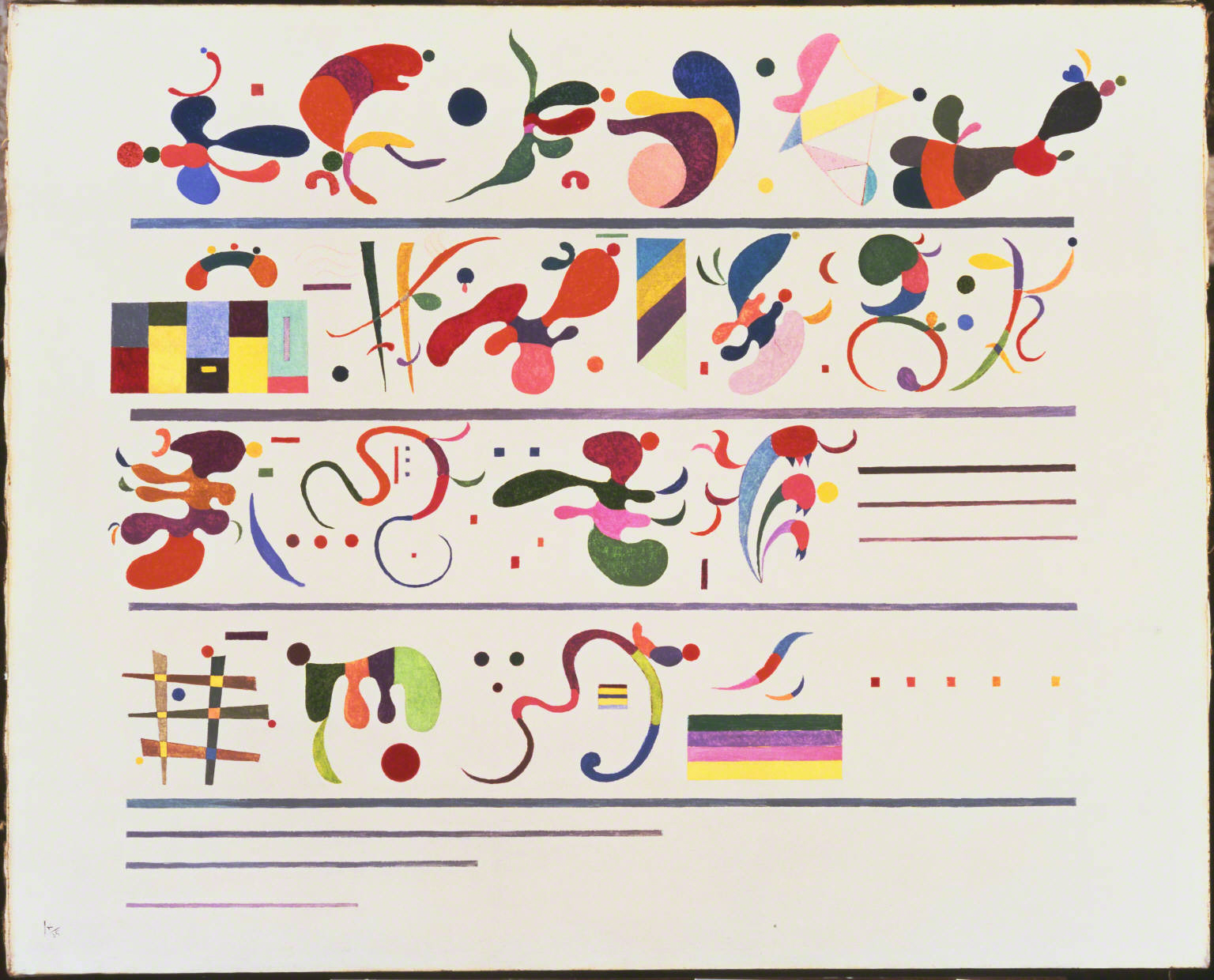
One of the more abstract examples of music in art within the collection is Wassily Kandinsky’s 1935 painting Succession. Exemplifying the artist’s exploration of vibrant color compositions and abstract forms, this painting is a wonderful representation of Kandinsky’s fascination with music. In this painting, organic shapes and geometric patterns form lines across the canvas, reminiscent of an orchestral score. Each dot, line, and curve presents a rhythmic and harmonious balance which creates a visual symphony for the eye.
For Kandinsky, music and color shared an important and inseparable bond. Long believed to have experienced synesthesia—the unique sensory crossover where colors evoke sounds and sounds trigger shapes or colors in the mind—Kandinsky once recounted an extraordinary visual reaction he experienced while attending a performance of Wagner’s Lohengrin. From the audience, the artist began to envision the music: “All my colors in spirit, before my eyes. Wild, almost crazy lines were sketched in front of me.” Music continued to influence his artistry, present in both the physical manifestations of his abstract work and his longing to express his inner life in art with the same ease that he felt music could.
“Color directly influences the soul. Color is the keyboard, the hammers are the eyes, the soul is the piano with many strings. The artist is the hand that plays, touching one key or another purposively, to cause vibrations in the soul.”—Wassily Kandinsky from his 1912 treatise, Concerning the Spiritual in Art
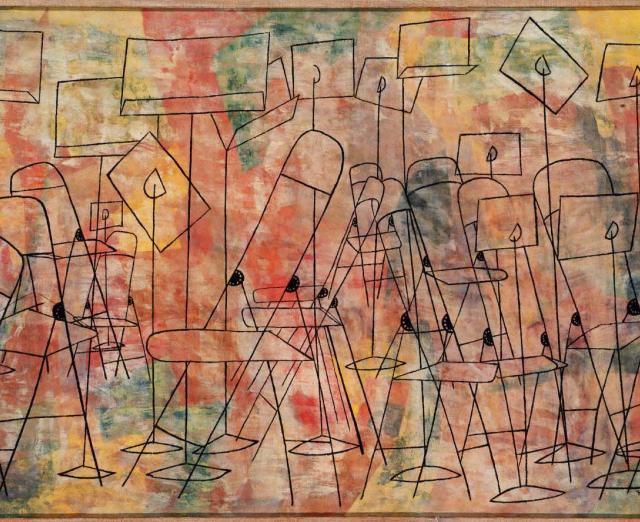
4. Ben Shahn, Still Music (1948)
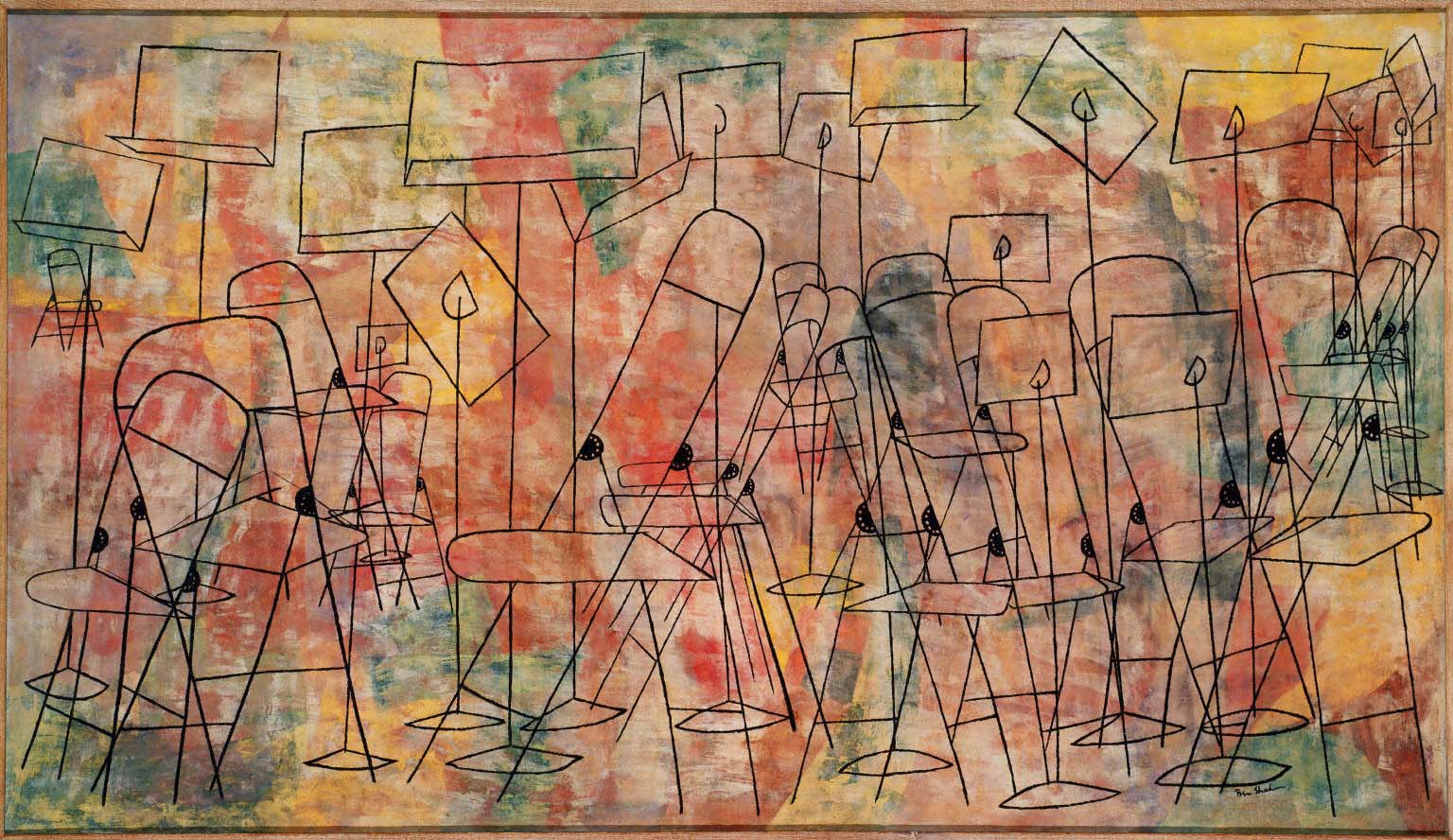
While no musicians are physically present in this work, Ben Shahn’s Still Music is another exceptional example of musical themes represented in the art at The Phillips Collection. Reminiscent of Paul Klee’s art (which Shahn admired greatly), this work features a dynamic interplay between the gradation of color in the background, and the rhythmic, angular lines present in the foreground. This relationship of polyphonic and conversational shapes creates a juxtaposition to the piece’s title. There is nothing “still” about this painting.
Within the piece, the brushstrokes covering the picture’s surface glow with a faint prismatic color, perhaps echoing the sounds of earlier performances. The sharp, angular lines and flat shapes are reminiscent of music stands and musician’s chairs, however empty or left behind they are. In actuality, the viewer is meant to ponder why no performers are present. In this case, economics may factor into the lack of musicians—Shahn jokingly explained the empty seats by calling the work “Local 802 on Strike!” perhaps making a comment on the financial struggles affecting musical education at the time.
This painting was featured in a 2025 special exhibition Out of Many: Reframing an American Art Collection, which celebrated the beauty and complexity of our nation’s history. In collaboration with this exhibition, Phillips Music worked with composers and performers to showcase a wide range of the American musical tradition from ceremonial marches to spiritual resonance. Concerts featuring The American Brass Quintet and Kristin Lee with Jun Cho performing American classics by Gershwin and Scott Joplin deeply resonated with Out of Many and demonstrate how music and art overlap at The Phillips Collection.
5. Dindga McCannon, Charlie Parker and Some of the Amazing Musicians He Influenced (1983-2010)
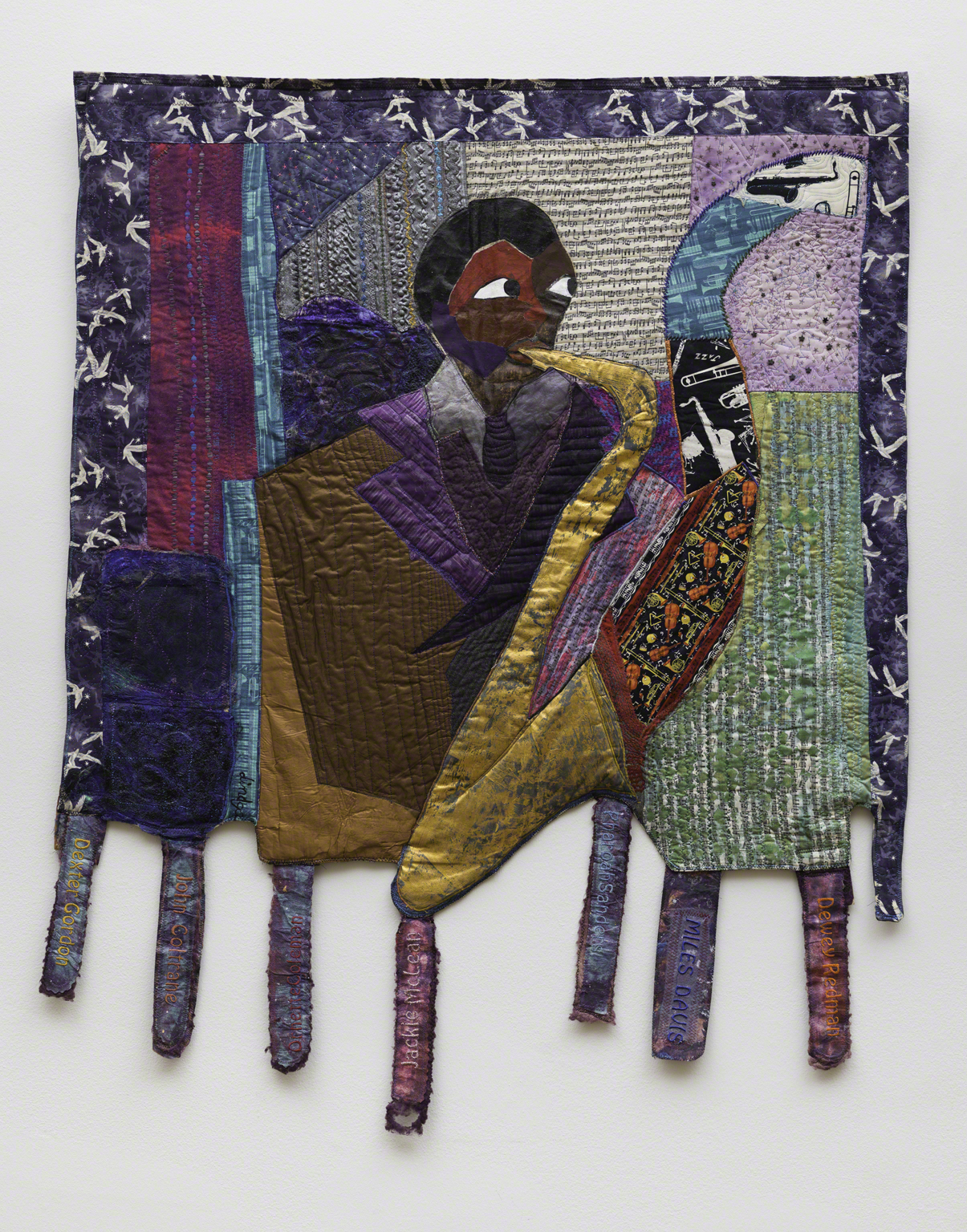
Born and raised in New York City, Dindga McCannon was surrounded by music. McCannon remembers listening to the music of Harlem and the Bronx as it floated up to her bedroom window. Charlie Parker and Some of the Amazing Musicians He Influenced is a tribute to that music and the instrumentalists of her life that brought her joy and inspiration. This quilt, which features McCannon’s signature vivid patterns and colors, incorporates a painted canvas that the artist began in 1983 (the face of Parker). A true labor of love, this quilt took decades to finish as it includes a selection of musical fabrics that McCannon collected over the years. To create Charlie Parker’s saxophone, McCannon used gold foil, a tribute to his kingly reputation in the jazz scene in New York.
Surrounding the quilt is a frame of birds, alluding to Parker’s nickname, “Bird,” which referenced his famous musical ability to “soar” when playing. Jazz was an escape for a young McCannon after a long day of working at her gallery on the Lower East Side. Inspired by the movement on stage, the artist created drawings of the legendary jazz musicians, later incorporating the drawings into her work. McCannon weaves histories through the fabric, uplifting figures who may have not been represented in their entirety before. In this way, the artist pays homage to the Black artists who came before her and the musicians who became her lifework.
Join Phillips Music again this year as our 86th season showcases an extraordinary lineup of artists across 30 concerts. And the next time you visit the Phillips, pay attention to the melodies you may find in your favorite piece of art.