Connecting Art and Music
Collection, Phillips Music
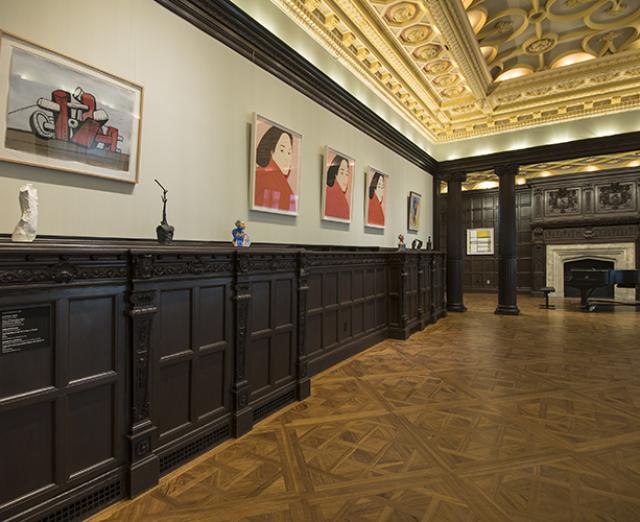
From now through May 31, The Phillips Collection is presenting a special installation in partnership with JS Audio—a listening room that intimately connects art and music, transforming the gallery into a multi-sensory experience. Visit Gallery E, on floor 2L of the Phillips House, take a seat, and immerse yourself in music and painting.
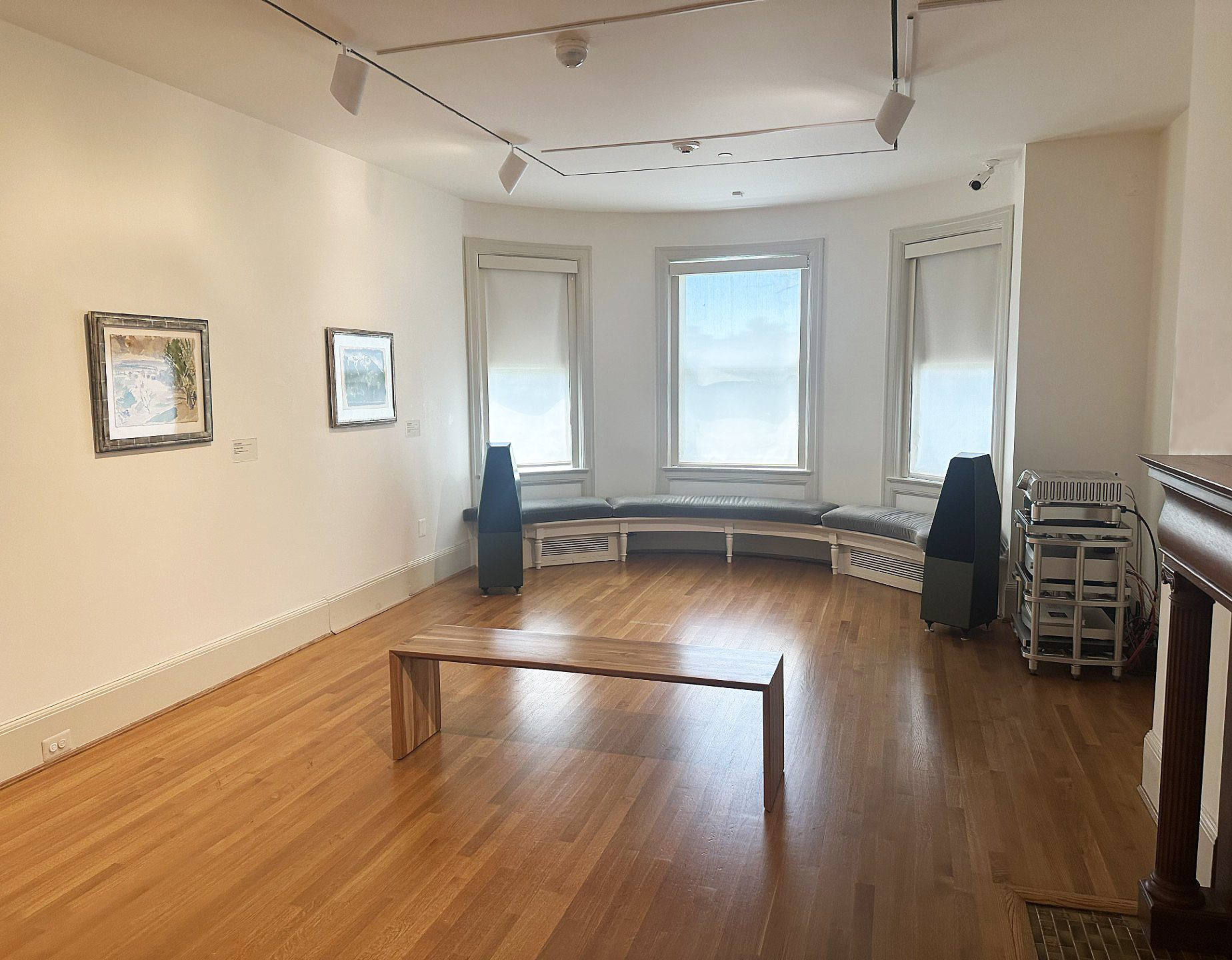
Phillips Collection Director of Music Jenny Lin and JS Audio Co-owner Dave Kennedy share thoughts about the intersection of art and music.
The playlist featured in the room is co-curated by Jenny and Dave in response to the artwork on view. Can you tell us about the music selection?
Playlist
- Aaron Copland, Symphony No. 2, 1932-33
- Seraphic Fire, Storm Comin’, 2011
- Leonard Bernstein, Overture from Candide, 1956
- John Luther Adams, Become Ocean, 2013
- Bill Evans, You Must Believe in Spring, 1981
This playlist was inspired by the landscapes of American modernist John Marin on view in the gallery. Marin’s colorful, abstract images range from the tranquil Black River Valley to bustling Bryant Square. The selections offer an American soundscape, moving between openness, energy, and atmosphere, inviting visitors to experience the gallery through sight and sound.
The music offers another path to experience the art and suggests the varied voices of America: the modern rhythms of Aaron Copland, the theatrical brilliance of Leonard Bernstein, the earthly vastness of John Luther Adams, and the intimate lyricism of Bill Evans. We want to encourage visitors to slow down and enjoy a shared environment where music and visual art coexist.
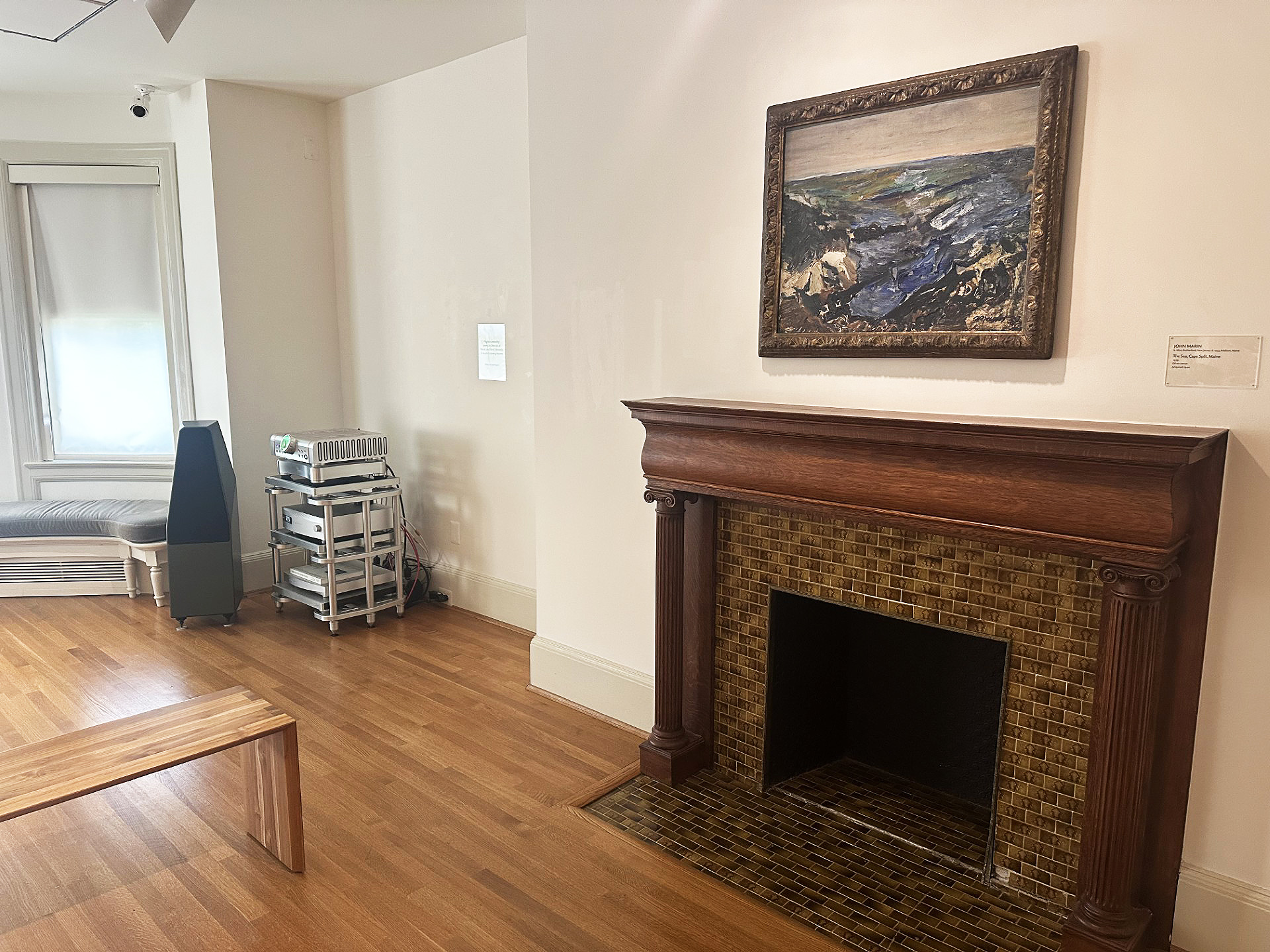
Duncan Phillips believed that art and music are powerfully intertwined. The museum’s acclaimed music program has just completed its 85th season. Jenny, can you talk about the importance of having this program at the museum?
Duncan Phillips believed deeply that art and music speak to one another—in profoundly complementary ways. Having a music program within the museum is not just an add-on; it is central to that vision. The Music Room, located at the heart of the Phillips family’s house, makes this statement especially meaningful. There is a reason this series has existed for 85 years. When concerts take place in the Music Room, surrounded by the collection, the experience becomes something more than a performance.
The intimacy of the Music Room is what makes the experience special—but that limited capacity also means that many people simply cannot experience these concerts in person. Part of our work is finding ways for audiences to carry that sense of connection beyond the Music Room—to experience Phillips Music in other parts of the museum, and even outside of it.
Technology and partnerships allow us to extend the life and reach of Phillips Music. Through thoughtfully designed listening experiences, such as this partnership with JS Audio, we are creating opportunities to revisit the concerts in new contexts. I think Duncan Phillips would have jumped at the chance to have this kind of listening environment in his own home.
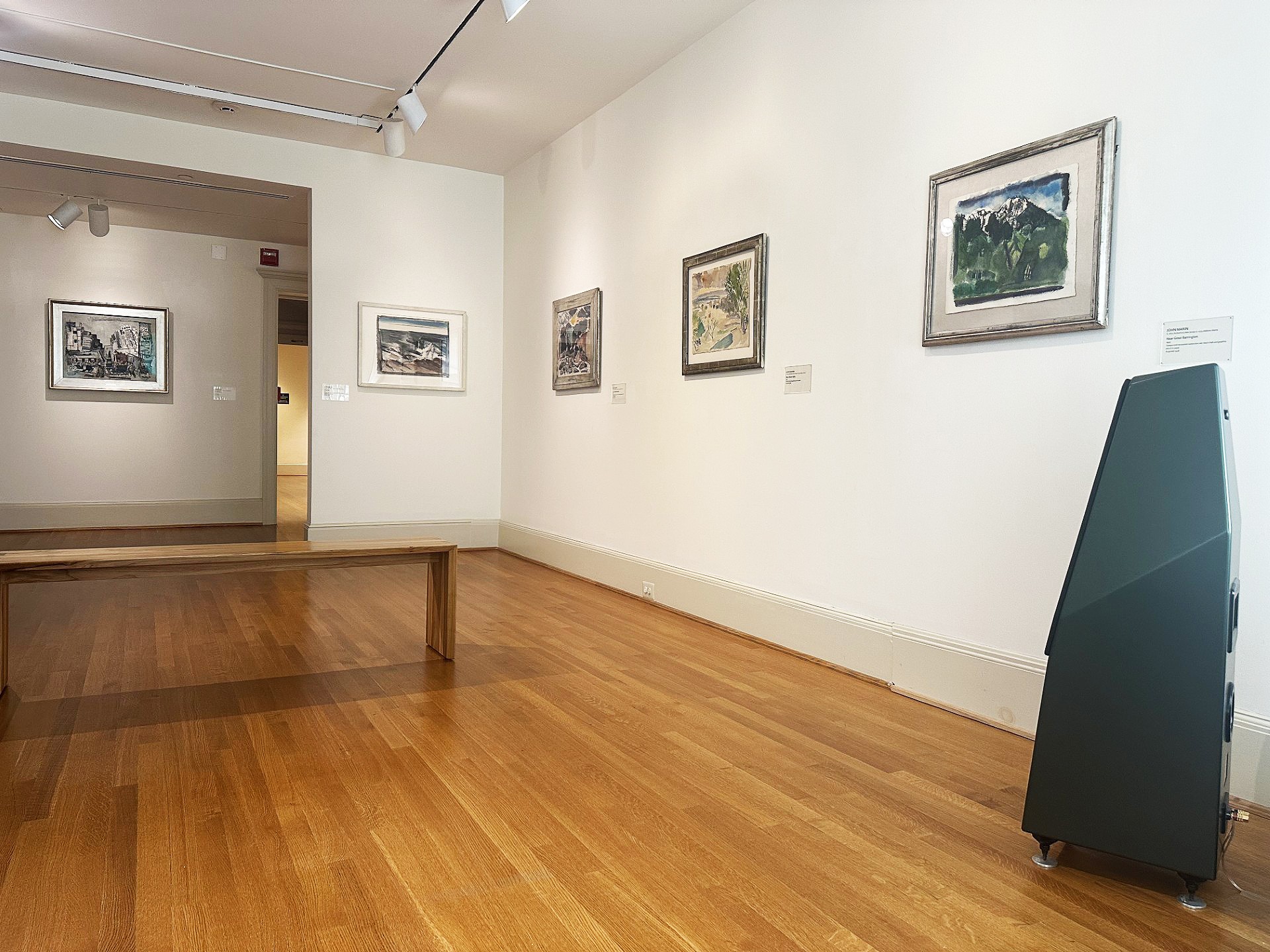
The music in the gallery—a room in the former Phillips home—is presented through a carefully selected and arranged player, speakers, and amplifiers. Dave, how did you you select the equipment for this space?
We sought to provide an open, airy soundstage, complementing the natural light coming from the bay windows. The Wilson speakers convey a solidity, a quiet presence in a compact cabinet. Here, careful placement avoids distracting resonance. We intentionally suffused Gallery E with music at lower than live volumes. dCS’s Rossini music source and Dan D’Agostino amplifiers are spectacular tools to preserve the natural rise and decay of notes in space.
I have always been inspired by the lyrical, rhythmic paintings of Wassily Kandinsky, especially seeing them in the intimate galleries of the Phillips. It is such an honor to be able to bring an additional musical element into these galleries, with a Kandinsky in the hallway leading into Gallery E and one downstairs in the West Parlor.
A new development of our Sunday Concert programming is that every concert complements one of our special exhibitions. Jenny, can you talk about how you work with our curators to draw out connections between the music and the art?
That collaboration with our curatorial team is really the starting point. I start by spending time with our curators—talking through the exhibitions, the artists, and the ideas behind the works. We try to look beyond what’s on the surface: shared themes, historical context, or even contrasts that could open up new ways of seeing and hearing.
Each concert complements a specific exhibition, but it also plays a role in a larger narrative, a cohesive thread that runs from the first concert to the last. I look for musicians and shape programs that respond to those ideas. Sometimes it’s about choosing composers who were directly connected to an artist or movement; other times it’s about capturing a similar spirit. The goal is to invite audiences to experience the museum in a more integrated way. You might encounter an exhibition visually and then hear those ideas through music.