The Phillips Collects: Paul Gardère and Diego Mouro
Collection
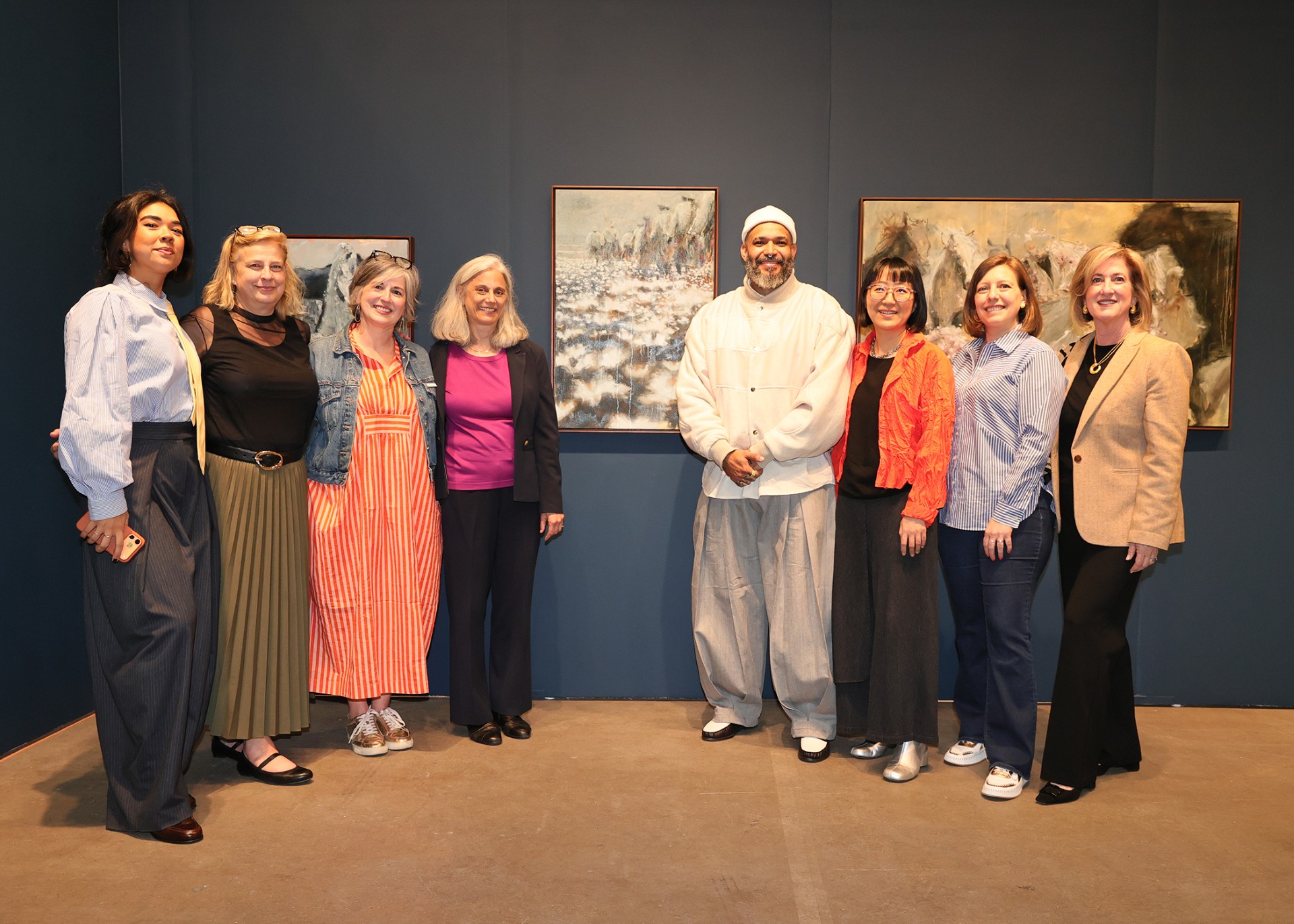
The Phillips Collection was awarded the Northern Trust Purchase Prize at the 2026 EXPO CHICAGO art fair. The prize supports the acquisition of works from the fair’s Focus section, dedicated to young galleries, and aligns with the museum’s commitment to amplifying innovative voices in contemporary art. Through the Northern Trust Purchase Prize, the Phillips acquired two paintings by Latin American artists whose practices engage histories of displacement, spirituality, and cultural memory, enriching the museum’s global perspective and deepening its engagement with underrepresented narratives: Untitled (Heads No. 36) by Paul Gardère and Indo buscar Sá Rainha by Diego Mouro.
Paul Claude Gardère (b. 1944, Port-au-Prince, Haiti–d. 2011, New York, New York) was an artist who worked across different media. He moved to New York with his family in 1959 at age 14, fleeing the dictatorship of François Duvalier. In New York, he studied at the Art Students League of New York, Cooper Union, and Hunter College.
Gardère came of age within the vibrant and politically charged art scene of 1960s and 1970s New York, a period shaped by the civil rights movements, antiwar protests, and the flourishing of diasporic and postcolonial artistic voices. In his practice, he continually engaged his experience of exile and diaspora, navigating references from multiple cultures while articulating a sense of non-belonging. His work probes the enduring effects of colonialism in Haiti, addressing histories of violence, subjugation, and dictatorship, all forces that shaped his own migration.
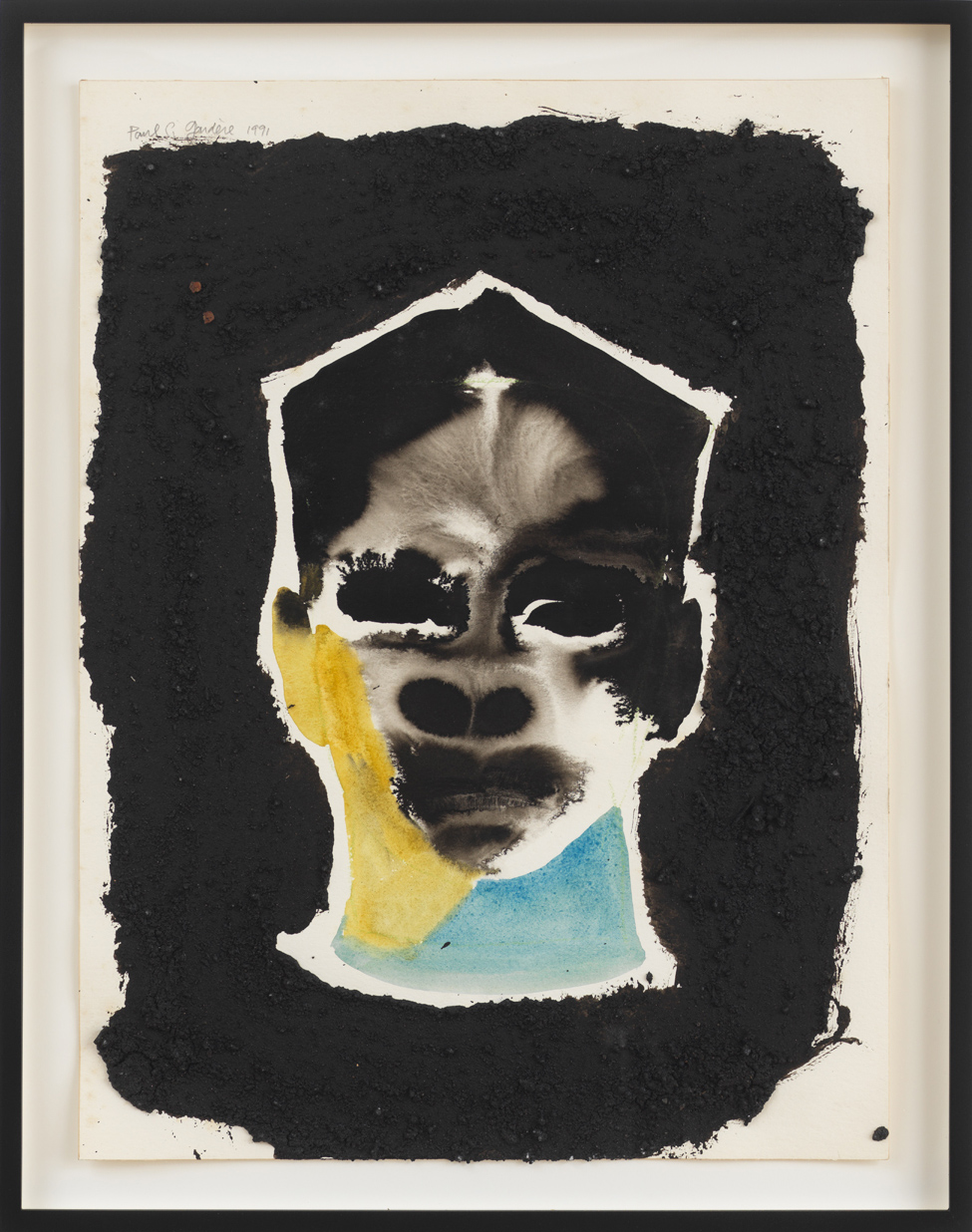
From 1989 to 1990, Gardère was an artist-in-residence at the Studio Museum in Harlem, becoming the first Haitian artist to hold that position. During this residency, he developed a body of work centered on the motif of the human head. Untitled (Heads No. 36) (1991) is an enigmatic portrait made with watercolor and mud. The figure’s eyes are rendered in a deep black that radiates outward across the face, creating an intense, almost destabilizing gaze. A bare area on the forehead suggests the form of a cross, evoking the markings of Ash Wednesday and alluding to mortality and the Catholic ritual. The structured geometry surrounding the head contrasts with the fluidity of the watercolor, while passages of yellow and blue disrupt the dominance of black. The application of mud grounds the figure in the symbolism and the materiality of land.
Diego Mouro (b. 1988, São Bernardo, Brazil; active in São Paulo, Brazil) is a self-taught artist who began his career creating murals throughout the city. His practice engages Afro-Brazilian history, culture, and spirituality, alongside humanist themes such as aging, loss, and the passage of time.
Indo buscar Sá Rainha (Going to fetch Sa Rainha) belongs to a larger body of work honoring Nossa Senhora do Rosário (Our Lady of the Rosary), revered as the patron saint of Black people in Brazil. In a sequence of many canvases, Mouro constructs a visual narrative that includes her apparition at sea, the retrieval of her image, and the celebrations of Congado and Reinado in her honor, among other scenes, interwoven with floral motifs.
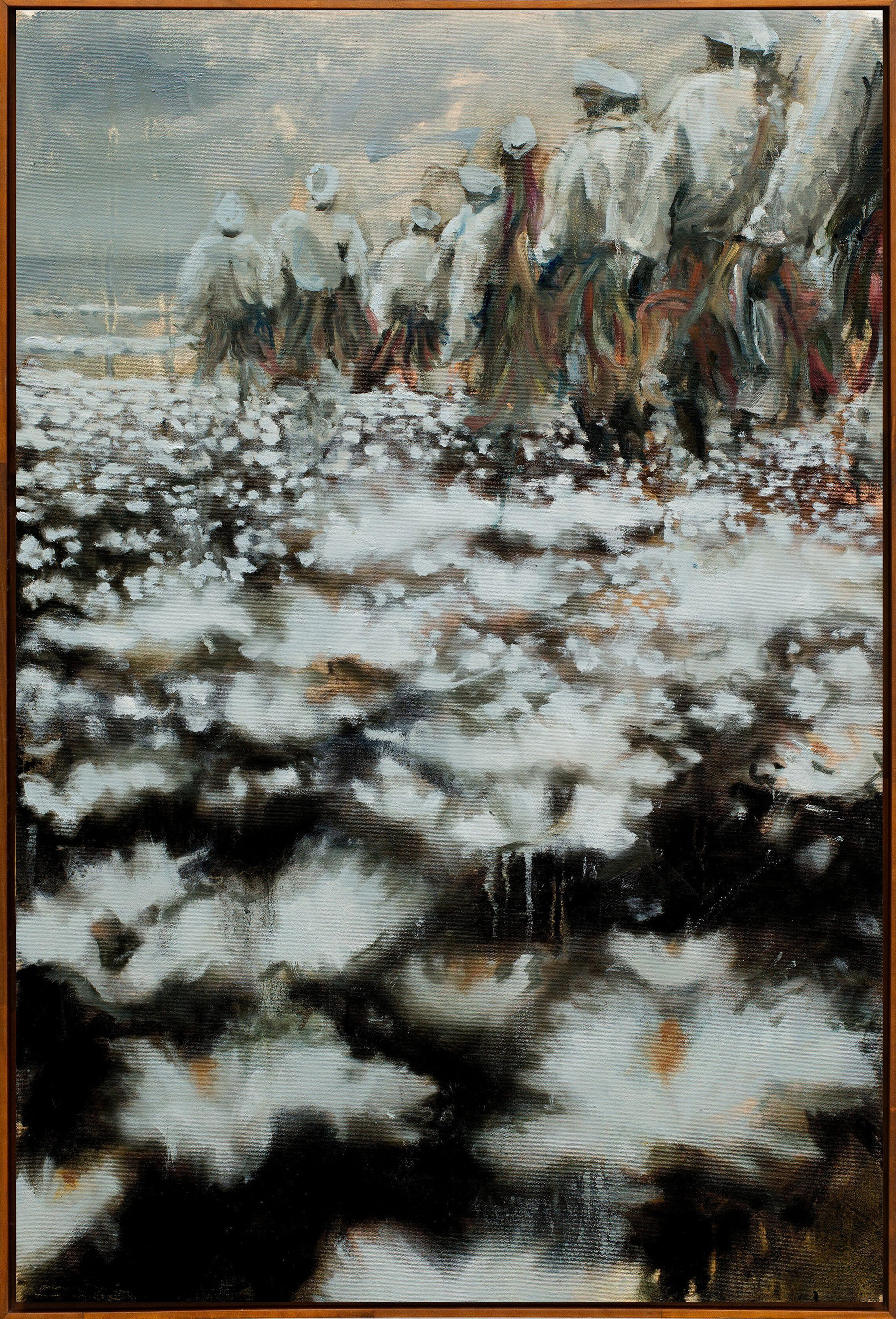
Indo buscar Sá Rainha depicts a procession of men moving toward the sea, bound together by a rope that suggests both physical and spiritual connection. The foreground and middle ground are filled with flowers, guiding the viewer’s gaze up toward the figures and creating a sense of rhythmic movement. The dominant use of white creates a sense of luminosity that evokes spirituality and a celestial presence.
Together, these acquisitions reflect the Phillips’s ongoing commitment to enriching its collection through works that expand the representation of multiple cultural perspectives and histories. By bringing Gardère’s and Mouro’s practices into its galleries, the museum not only deepens its longtime engagement with themes of migration, spirituality, and resilience, but also affirms its role as a space where art’s global narratives have the potential to spark connection and reflection in meaningful and transformative ways.