Channeling Miró: Creating a Digital Experience
Exhibitions & Events
From now through July 5, when you enter The Phillips Collection, you’ll see a a glowing 1950s television set inspired by our current exhibition Miró and the United States. Head of Digital Experience Collin Warren shares the process for this special interactive.
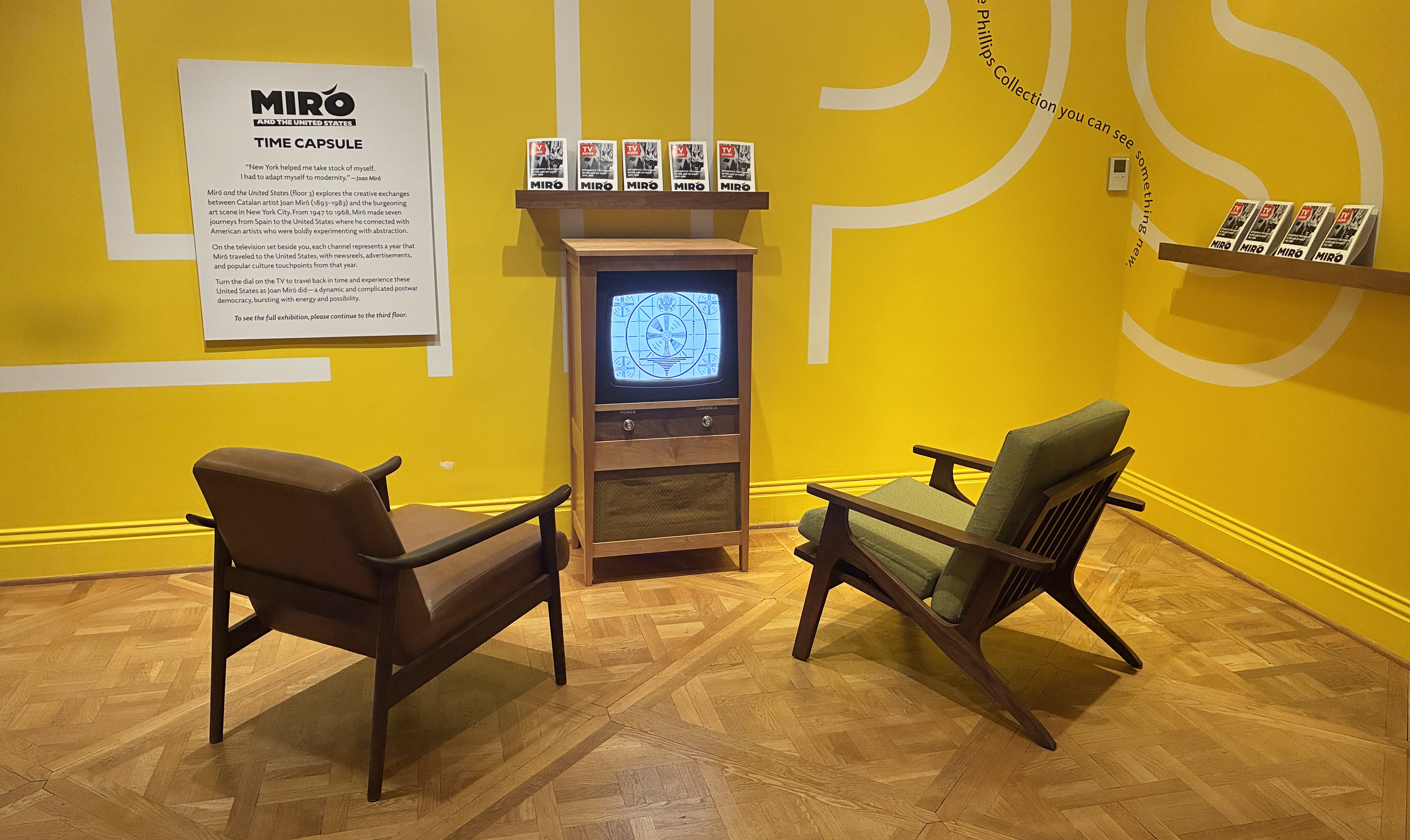
At the Phillips, our exhibitions include many types of interpretation. As Head of Digital Experience, I oversee our in-gallery digital content—things like our digital guide and audio tours. When planning our digital interpretation, the question our team is always asking is: What can digital do that is different? One answer is what we call “MTMDs”: Magical, Tactile Media Devices. These are physical objects with digital content that our guests interact with in ways that feel anything but digital.
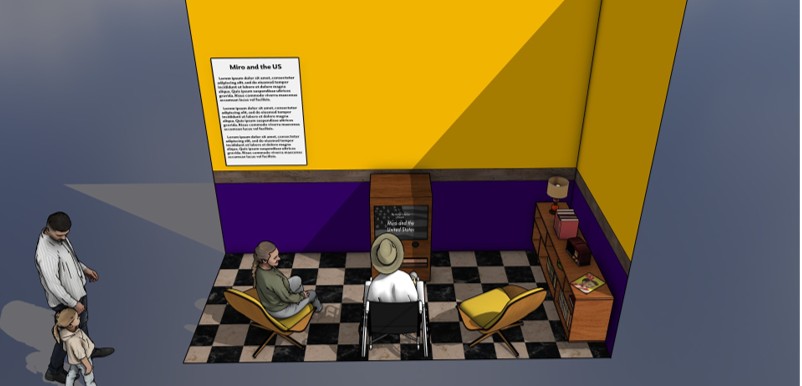
For Miró and the United States—which features the art of Joan Miró along with two generations of American Abstract Expressionists—we wanted to provide a unique experience of the time and place in which these artists were working: the United States in the 1940s-60s. We wanted this experience to be fun, unexpected, and interactive. We arrived at the idea of a retro television. On this television, each channel would represent one of the years Miró visited the United States. On these channels guests would see a collage of cultural touchpoints—the Cold War, the Space Race, the Civil Rights Movement, and more—to help contextualize the work of Miró and his American counterparts.
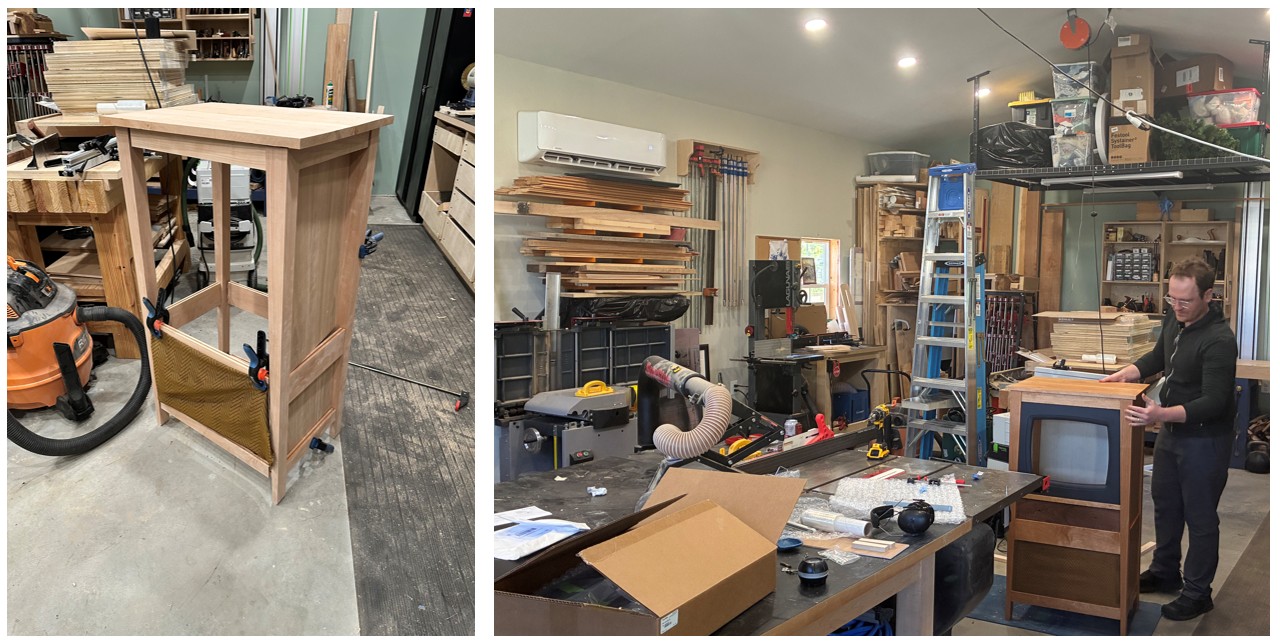
To build the period cabinet that would house this experience we engaged woodworker Thomas Hunter, a former Phillips staff member. Thomas looked at numerous examples of period TVs and also researched the original furniture of the Phillips House so that this new piece would match the heritage of the museum itself. On the TV cabinet there will be an analog switch and an analog rotary knob. Guests will use the knob to change channels.
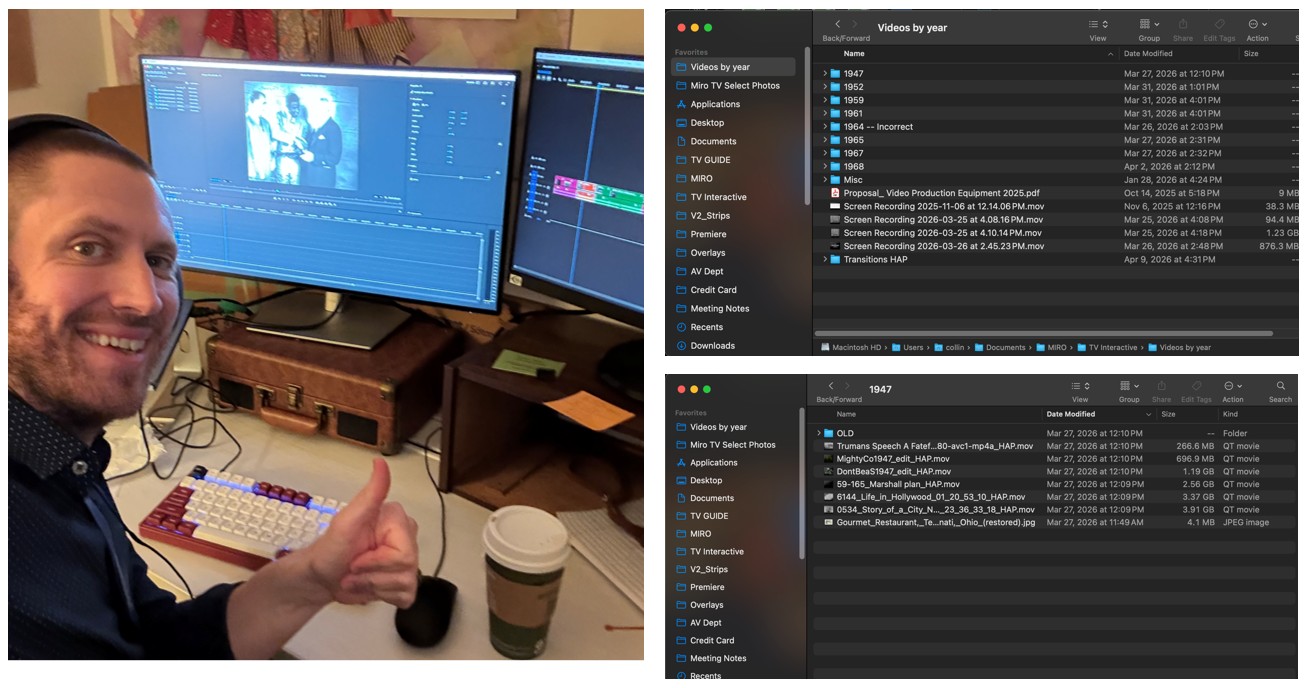
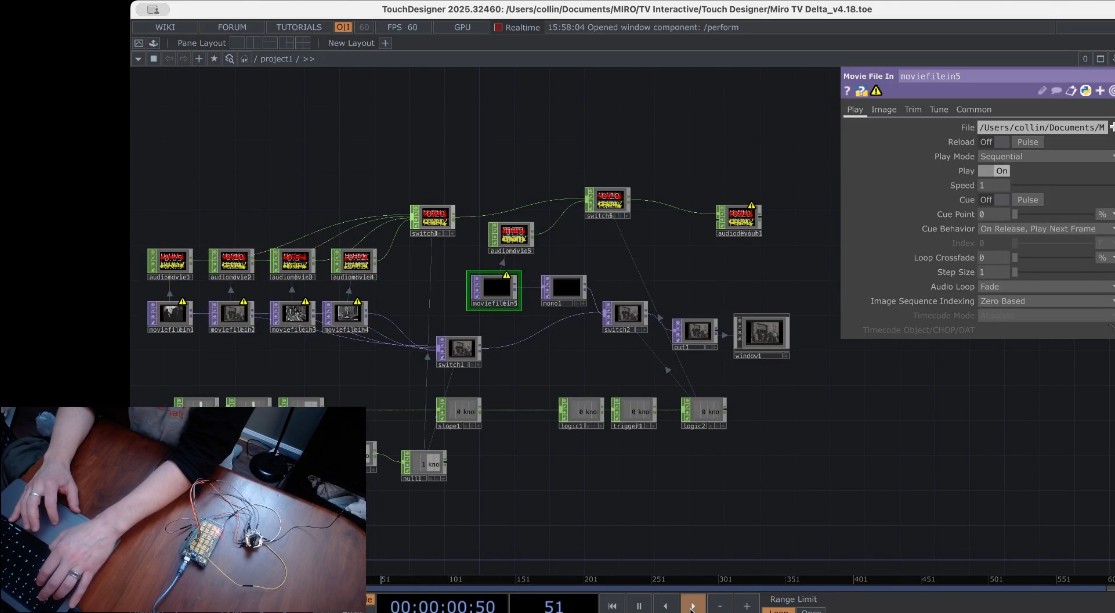
While this was happening, I began amassing archival clips, editing them and learning how to program the interactive experience using the software Touch Designer. The individual “channels” will be played back via Touch Designer running on a Mac Mini computer. An Arduino micro controller will act as the translator between the physical controls and the computer. The display would be a AcuuView 5x4 exhibit grade display. Python code was written to allow Touch Designer to record a timestamped record of user interactions.
Our team then began envisioning the physical space for this exhibit. An exciting choice was made to place the TV in the Morris and Gwendolyn Cafritz Foundation Welcome Gallery on the first floor, right as you enter the museum, rather than in the exhibition galleries on the third floor. The hope was that the television would provide an inflection point drawing people into the special exhibition as they arrive and extending their experience as they leave. We also designed a handout in the style of a 1950s “TV Guide” to allow guests to explore the content that was contained in each of the “channels.”
Finally, after many months of building, we were ready to launch the interactive. Of course, no project would be complete without a small heart attack. As we were doing our final install, I accidentally pressed what I now know to be the “factory reset button” on the Arduino controller. This completely wiped the code and rendered the controllers useless. Luckily, we had the code backed up and, once we recognized the problem, we quickly reinstalled it. But that was a scary couple of minutes!
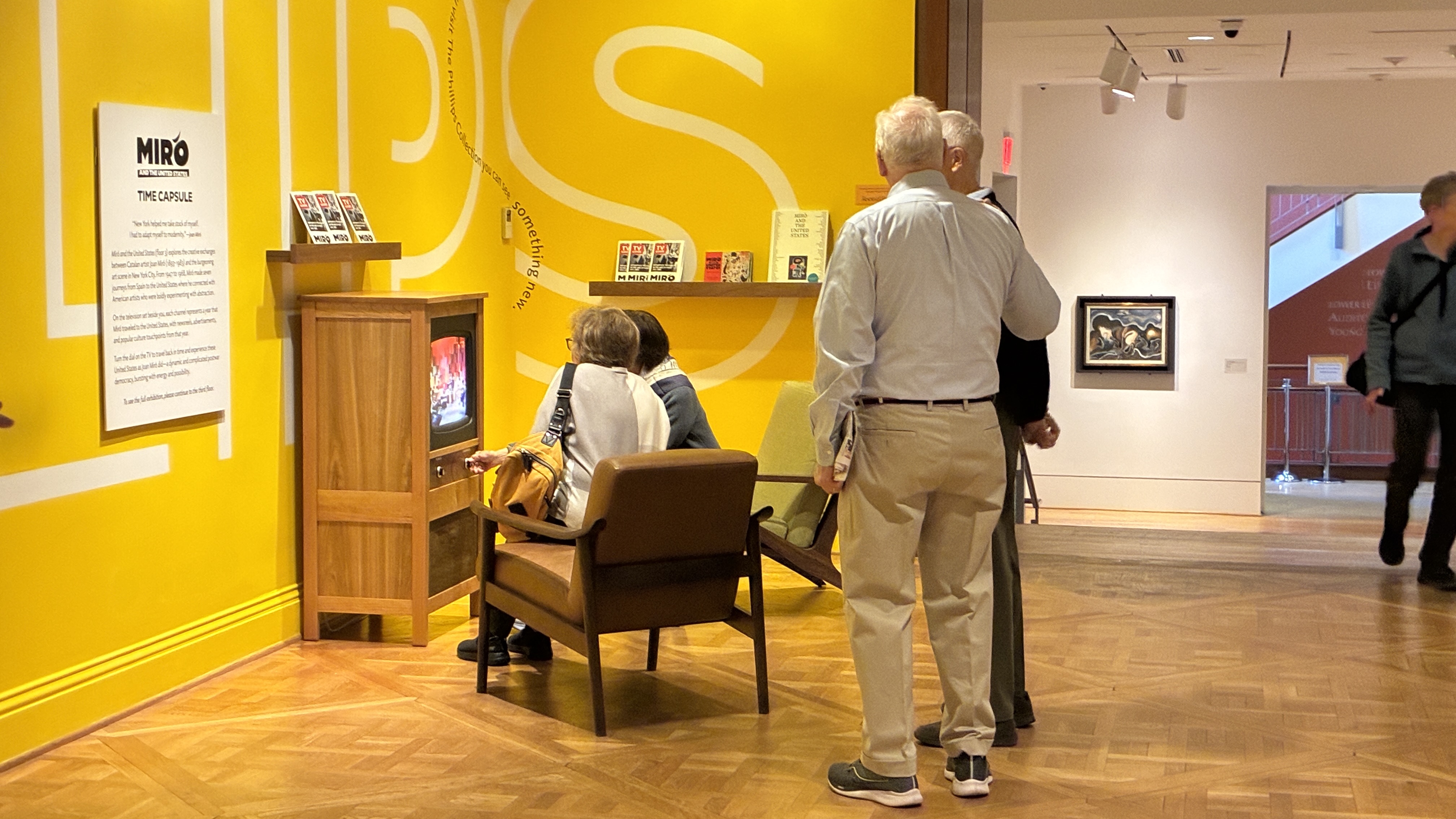
In the end, all our efforts were worth it. As soon as we opened the museum doors that morning, the very first group to walk in the galleries immediately gathered around the television. Not only that, they stayed and they watched—intently. Then the next group came and did the same. And the next, and the next. It was an emotional feeling to see something that had existed only in concept actually captivating these guests and providing the experiences we were hoping it would.
To close, there are two expressions that we use a lot in our interpretation team that I would like to share. The first, attributed to John Francis Fitzgerald (JFK’s grandfather), is “throw your hat over the wall” that is too high to climb. This is the act of committing to doing something that, at the time of commitment, you do not know how to do.
This project contained a multitude of firsts. I had never designed a physical exhibit from scratch. I had never used, let alone programmed, an Arduino board. I had never used Touch Designer or coded anything in Python. And yet, we said we were going to do it and we did.
Another expression I use often is, “Sometimes we must build rockets to see whether or not they explode.” Learning is about making mistakes—lots of them. Innovation is about pushing the envelope (do you see the astronaut theme here?), pursuing things that haven’t yet proven to be possible. I feel an enormous amount of gratitude for the support of our institution and my colleagues who are so game to embark on these journeys. I cannot wait to see what we build next.