Dominoes Bring Us Together
Exhibitions & Events
Advancement Associate Natalie R. Courtney shares how Horace Pippin inspires her art. Pippin’s work is on view in Out of Many: Reframing an American Art Collection.
My childhood in Texas and Louisiana was filled with domino games, laughter, and spirited aunties. I loved watching their lively conversations as they slapped down pieces and exchanged stoic stares. These vivid memories fueled a new artistic journey for me, exploring the theme of “play” with acrylic and oil paint markers (you can see my work Leg Up from this series in the Staff Show through February 8). Adding these illustrative qualities, my art flourished through experimentation.
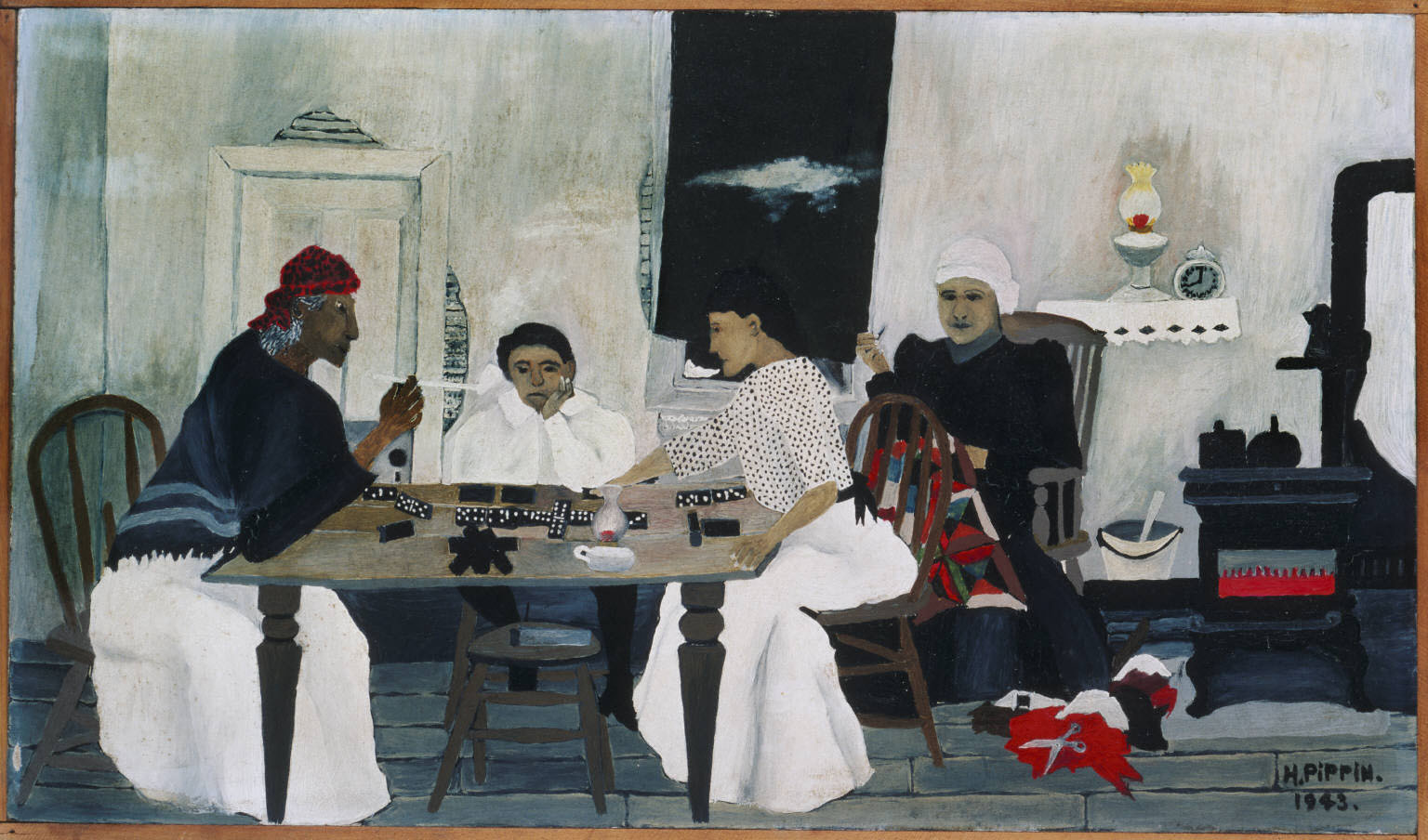
One of the works in my play series, Dominoez, draws inspiration from Horace Pippin’s Domino Players (1943) in the Phillips’s collection. Pippin (b. 1888, West Chester Pennsylvania; d. 1946, West Chester, Pennsylvania) was a self-taught artist known for his social realist paintings. His work taught me to use the figure and add details to express relationships and emotion. For example, his use of melancholy expressions, cool-toned cracked walls, and a stove lit to heat the home all work together to convey mood and context. In Domino Players, these elements come together to draw attention to the real socio-political conditions of the African American working-class woman, serving as a critique of the power structures that shape their lives. My exposure to Pippin’s art deepened during my time at Howard University, where my engagement with the Harlem Renaissance shaped my admiration for his realism and continues to inspire my practice. This connection was reinforced during my first week at the Phillips when I saw the work in person for the first time. I was delighted to see artwork from my textbooks on the walls!
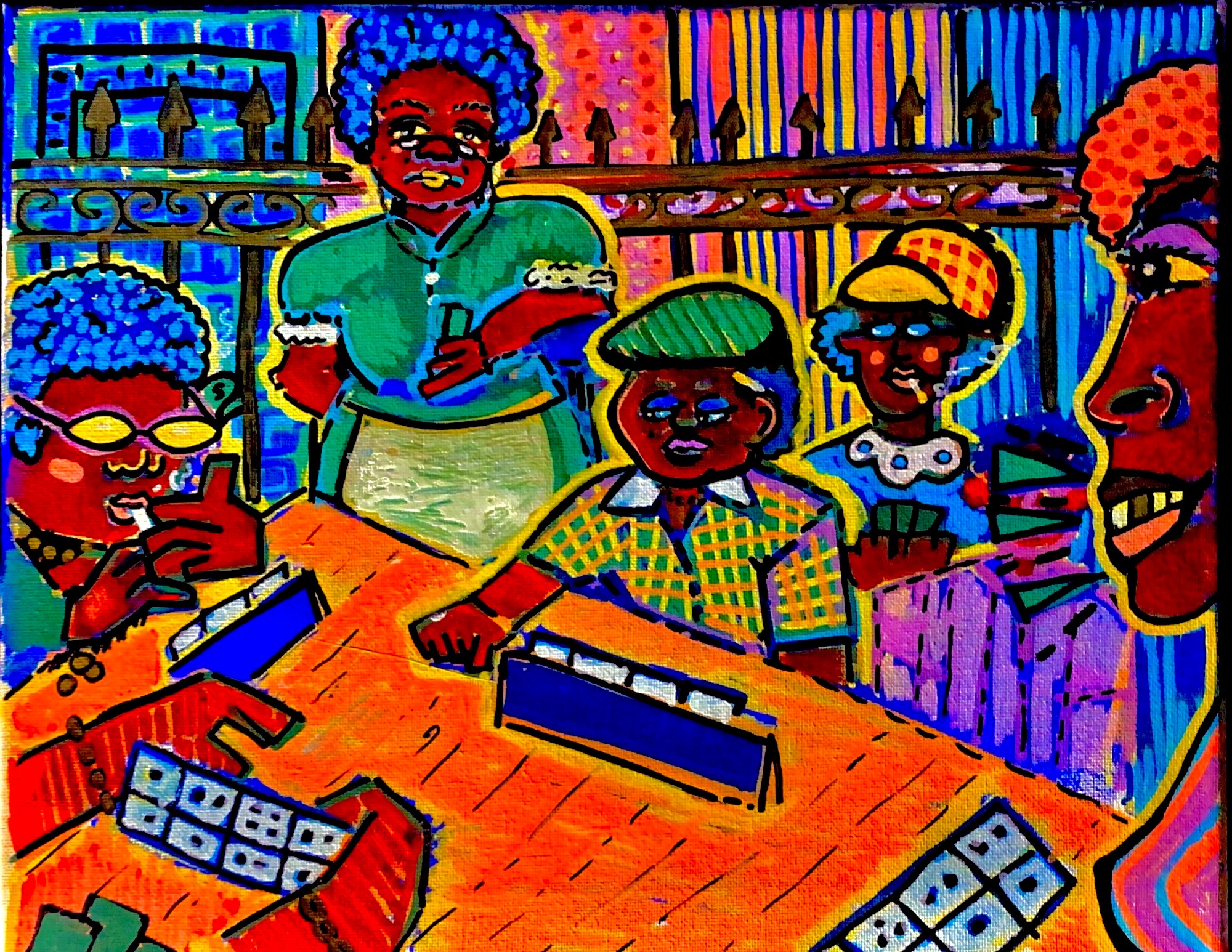
Building on this foundation, Dominoez tells the story of community among Black women elders and I strive to elevate the bright personalities of Black women in my art. The act of gathering and playing has been pivotal to my artistic practice. As I get older, I recognize how much these simple times meant to them and their mental health. This awareness now informs my artistic choices, such as the bold lines and red hues, which express their strength and deep passion for the game as they are surrounded by loved ones. In contrast to Pippin’s use of a limited palette, which conveys a sense of quiet, my saturated colors reflect my elders’ roaring personalities and moods, thereby highlighting a distinct perspective.
This creation is an ode to new mediums and a dialogue between tradition and change, expressing unity, resilience, and trust in our Black community. I thank Horace Pippin for opening doors for Black artists to create and reshape “Black Art.” I hope Dominoez opens more paths, inspiring future generations to use their voices and redefine what Black Art can be.