Meet Our New Curator of Modern Art
People & Community
In July, The Phillips Collection welcomed Clarisse Fava-Piz as the new Curator of Modern Art. Clarisse shares her journey to the Phillips and what she has learned about this special museum.
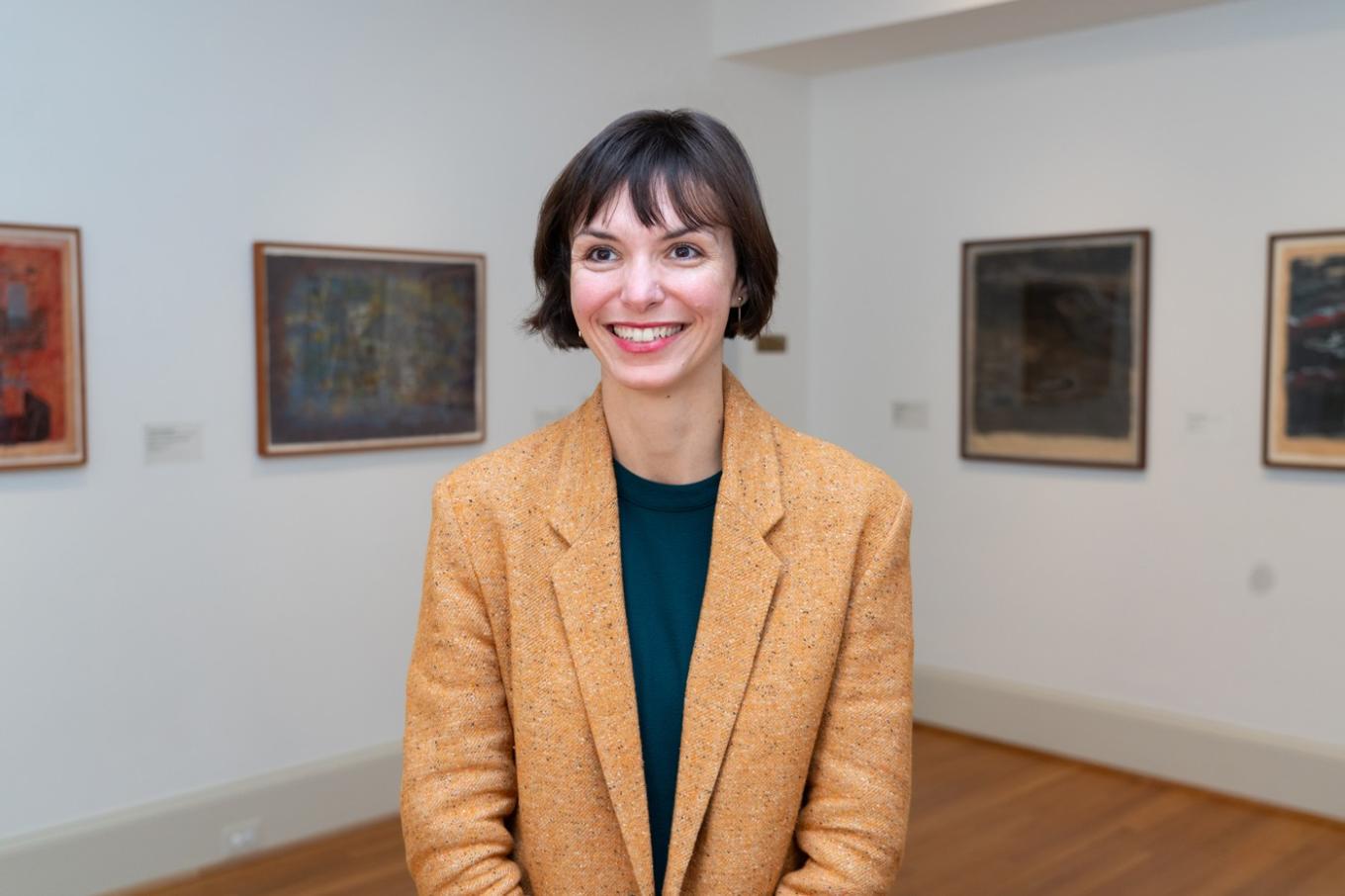
Curator of Modern Art Clarisse Fava-Piz. Photo: AK Blythe
Tell us about yourself and how you ended up at the Phillips.
I “fell into” art history when I was in high school. After my first couple of art history classes, I knew that I wanted to become a museum curator. And it was early on in my career, as a summer intern at the National Gallery of Art, DC, in 2012 that I discovered The Phillips Collection and admired its carefully curated collection of European and American art—la crème de la crème—a world class collection of modern art in a beautiful, historic home.
After finishing my undergraduate and graduate degrees in France and in Spain, I capped my studies with a PhD in the United States. My interests led me to studying 19th- and early 20th-century transnational exchanges and the mobility of sculptures across borders.
Academic studies were not the only criteria needed to become a curator though. Since my early twenties, I have worked in various capacities in cultural institutions on both sides of the Atlantic, from research centers (like the Institut National d’Histoire de l’Art in Paris and the Getty Research Institute in LA) to art galleries and museums (such as the National Gallery of Art and the Meadows Museum at SMU in Dallas).
Before joining the Phillips, I was associate curator of European and American Art before 1900 at the Denver Art Museum, where I greatly enjoyed curating the exhibition The Honest Eye: Camille Pissarro’s Impressionism, the first major retrospective of the artist in the US in over 40 years.
Now, as a Phillips curator, I get to live every day with such an impressive and canonical collection, and it is great fun!
What have you been working on since your arrival in July? What are your priorities?
Since day one, my priority has been to learn about our collection and understand its history and the vision of its founder in order to become a better steward! It takes time to get to know about 6,000 artworks, and it does not happen overnight, but it is a rewarding task. Going to storage and to the conservation lab, spending time in the galleries, and looking at files in our library are all great ways to get to know the collection, as well as learning from my colleagues.
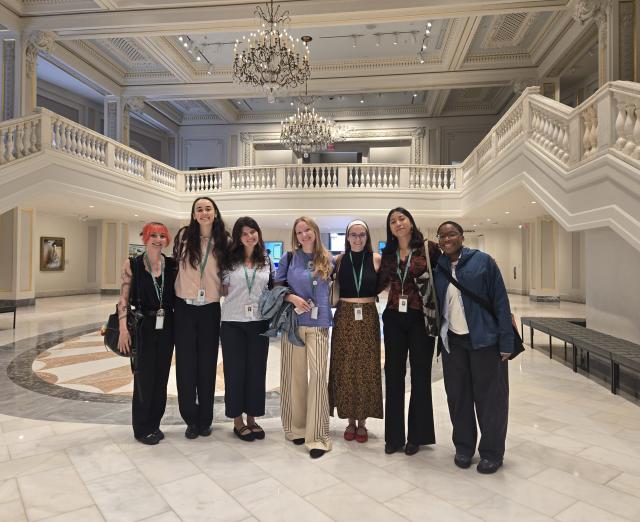
I also had the chance to welcome to the Phillips the first large scale gathering of French curators working in American Museums, organized by the Villa Albertine in early December. The Phillips was the first stop of this two-day seminar, and we spent a full morning having roundtable conversations and conservation and curatorial led tours.
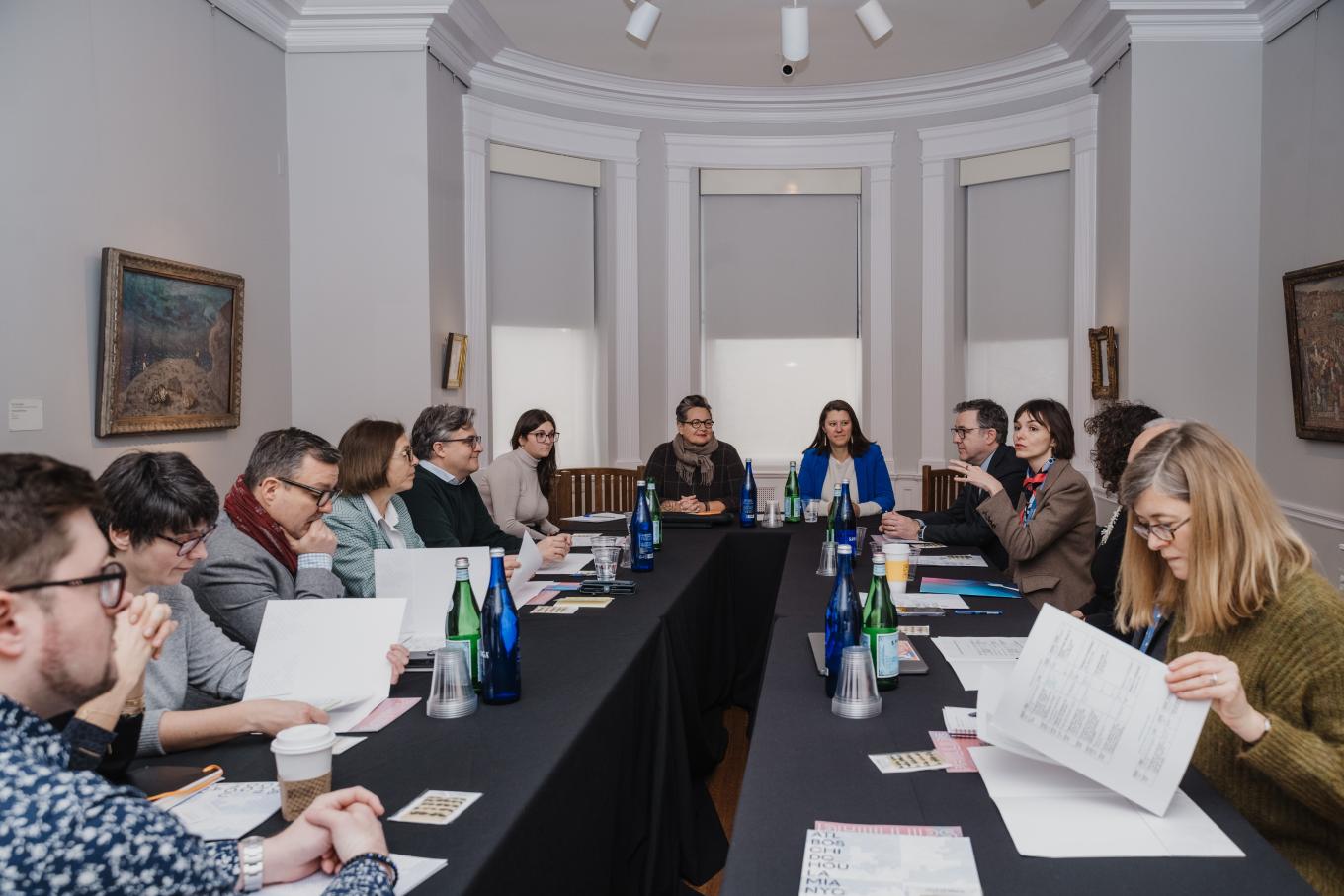
Meeting of French curators at The Phillips Collection © Embassy of France in the United States et © Villa Albertine
What makes the Phillips special? What do you want people to know about the Phillips?
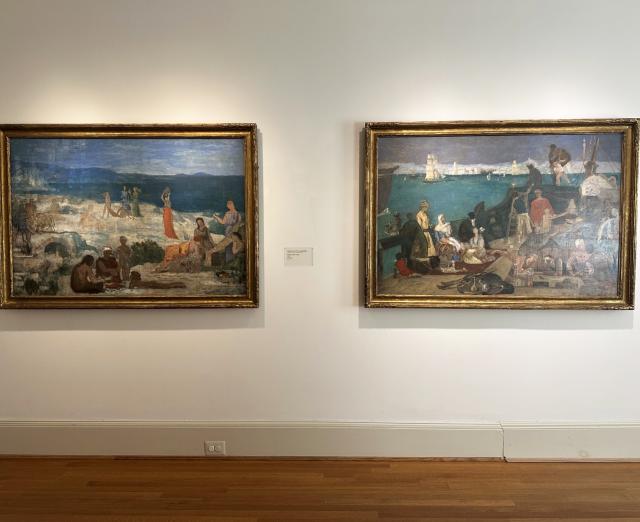
The Phillips Collection is a true gem in Washington, DC, where guests encounter artworks as if they were hanging in their own home. There is something to be said about the power of such intimate encounters with art, and the sense of awe that it can provoke. I think that one of the most surprising elements about this collection is the fact that we rotate our collection often. Every time you come, you will most likely discover new artworks and be surprised by unexpected artistic dialogues on the wall—as intended by Duncan Phillips. It is not about a narrative of the history of modernism, but rather about the surprising aesthetic conversations that curators are challenged to create. And do not forget to step into the Music Room, where the Sunday Concert series enhances our rich visual art collection!
What Phillips curatorial projects/exhibitions are you particularly excited about?
An immediate project that I am working on is around the exceptional loan from the Musée d’Orsay of Renoir’s Bal du moulin de la Galette in the summer of 2027. It will be a focused dialogue between a cornerstone of our collection, Luncheon of the Boating Party, and the Bal du moulin de la Galette, and I look forward to sharing more.
As I continue to learn more about the collection and its DNA, my next priority is to unveil what stories have not yet been told about its artworks. I will share more soon about these discoveries!
What is your favorite Phillips artwork/artist?
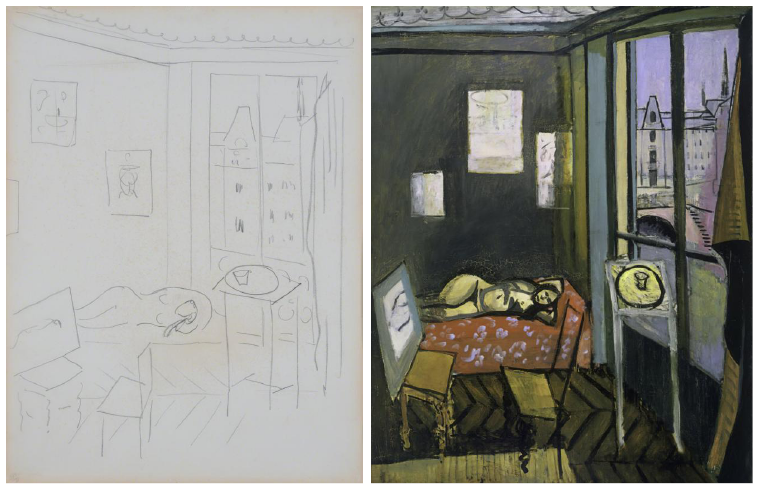
It is the question that you are always asked as a curator, and I always hesitate and find it impossible to answer—kind of like picking your favorite child. But one of the highlights of my first six months has been to work closely with our paper conservator, Sylvia Albro, on a recently acquired drawing by Matisse, which is a large scale study of his painting Studio, Quai St Michel. Because of this research, I would say Matisse’s Studio Quai St Michel. I have enjoyed spending time with that work, and looking at the ways the artist moved the figure in the center of the composition and changed the perspective of this interior—so cramped and so reminiscent of my student years living in a tiny Parisian studio, though mine did not have the privilege of having a window onto the river Seine like in Matisse’s studio.